![Exploring Invertebrates: 10 Picture Books to Introduce Animal Characteristics [ep. 9]](https://www.naturallyteaching.com/wp-content/uploads/2024/07/exploring-invertebrates-books-header-300x200.png)
Science
Frogs and Toads Together: Why do Amphibians Group Up?April 11, 2025

An elementary teacher science blog
Affiliate disclosure: As an Amazon Associate, I may earn commissions from qualifying purchases from Amazon.com. This is at no extra cost to you. If you’d like to learn more, check out my disclaimers page.
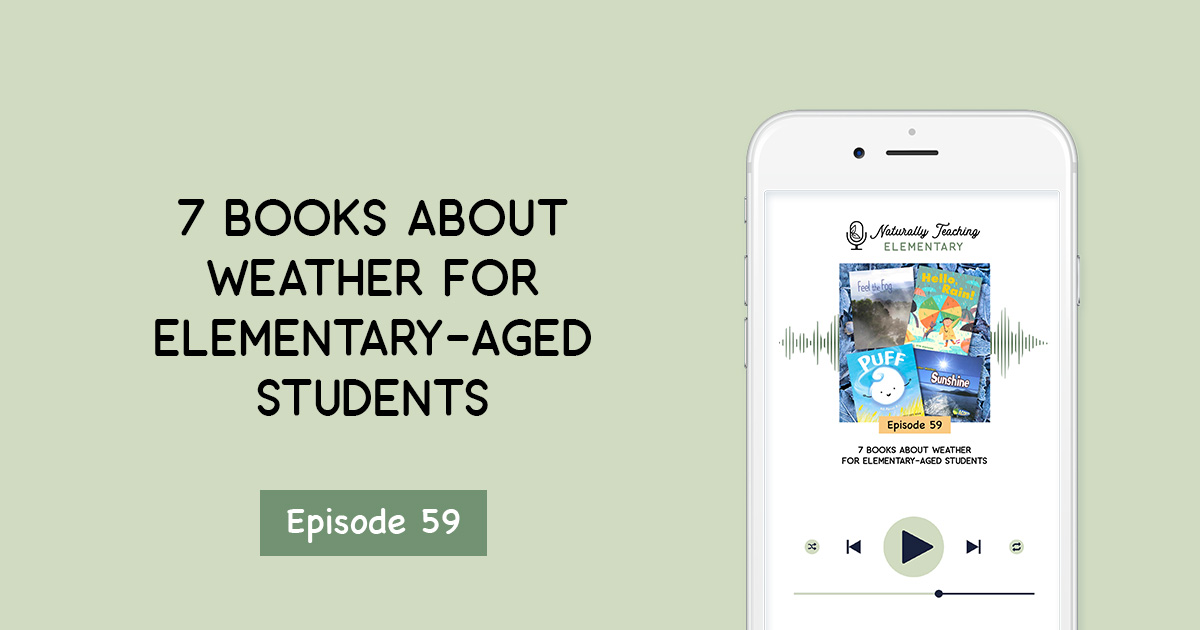
If you’re looking for a way to experience a variety of weather conditions with your learners, now’s your chance! March is a time of lots of different weather including frost, dew, fog, rain, clouds, sunshine, and more.
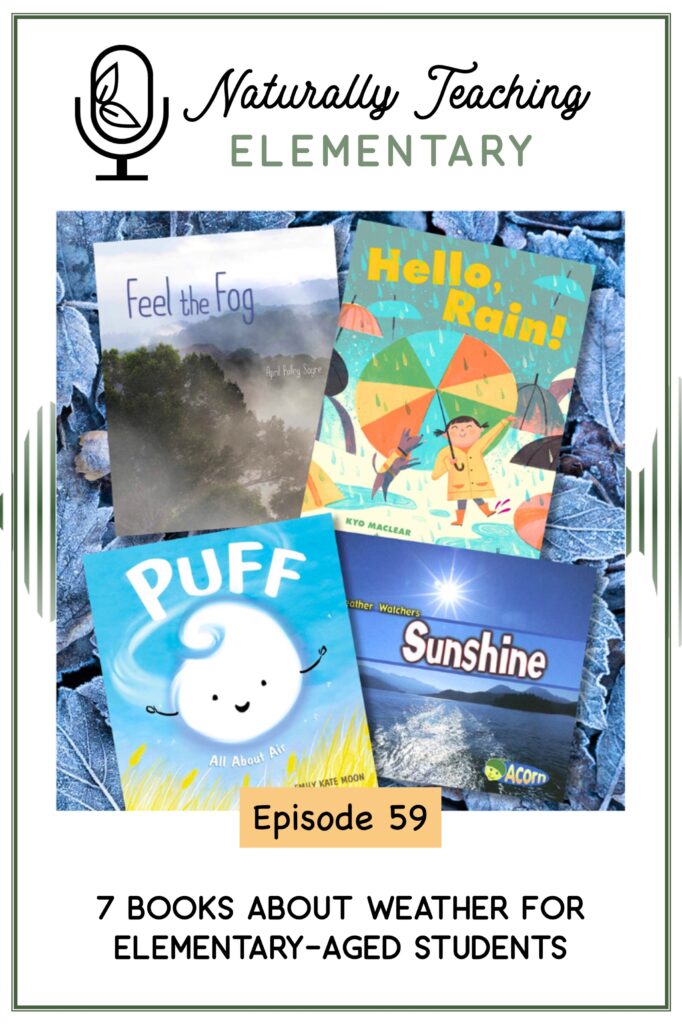
In this episode, I share 7 books about weather. Listen in to discover some amazing picture books about fog, frost, dew, crazy weather, and more to use this school year!
Books about weather covered in this episode include:
Extra books about weather covered in this episode include:
Affiliate Disclosure
I only endorse things that I’ve personally used, come highly recommended by trusted peers, or I’ve done extensive research on. As an Amazon Associate, I may earn commissions from qualifying purchases from Amazon.com. This is at no extra cost to you, the commission is covered by the company.
I am recommending products that I think will be genuinely helpful and useful, and not because of the small commissions that I receive. Please only purchase items if you believe that they will help you achieve your educational goals. If you’d like to learn more, check out my disclaimers page.
[0:00]
Teaching elementary-aged children is a rewarding experience, but as educators and parents, finding the time and resources to create engaging lessons can be a challenge. That's where this podcast comes in. Welcome to Naturally Teaching Elementary.
I'm Victoria Zablocki, a certified elementary teacher turned outdoor educator. With over a decade of experience coaching teachers on effective teaching methods, I'm passionate about teaching the whole child with authentic and place-based experiences in school and home settings. Join me as we explore our strategies for teaching with practical teaching tips, insightful interviews, picture book reviews, and more. So let's grow together.
All right. Welcome back to the Naturally Teaching Elementary Podcast. My name is Victoria Zablocki and I'm your host. March is a time of varying weather, which makes it the perfect time to start learning about weather or revisit it from the fall. Speaking from experience here in Michigan, you get fog, rain, snow, sun, clouds, thunderstorms, frost, dew, warm and cold temps, all as the seasons turn from winter to spring.
If you want to give your learners varied experiences with weather conditions, now's your chance. What better way to introduce these scientific phenomena than with picture books? So to help you, the teacher or homeschool parent, get inspired, I put together a list of seven books about weather that provide you pictures and texts to explore some of the more unique weather conditions.
These books hit on weather topics such as fog, dew, frost, weird weather, and even weather safety. And if you've listened to my other episodes about picture books, I'm sure that you've caught on to the fact that I'm very passionate about teaching science concepts with the help of children's literature. And for good reason.
Research has shown that integrating science and literacy has many benefits, including saving teachers time in their schedule, improved attitudes of children towards science, better overall performance in reading and science, and so many more. For more information about benefits and methods for integrating science and literacy, check out my blog post, Teaching with Books: How to Integrate Science and Literacy for Elementary Classrooms. So let's get into this.
[2:03]
Book number one is Feel the Fog by April Pulley Sayre. And this book is set in nature during times of fog and includes a simple and short storyline. Sayre shares how fog forms, where it can be found, and different parts of nature that interact with fog.
She also encourages the readers to feel the fog with words like damp, dewy, cold, and drippy. Fog is a very interesting and intriguing weather phenomenon, and this book is a great option to introduce how fog forms. It's also very engaging since she uses photographs to illustrate her points.
At the end of the book, she has different facts about the fog, which is nice to look closely at with older learners. As a side note, Sayre has a bunch of different books, including other rhyming photograph books, some of which I've talked about before. You can hear about Bloom Boom in Episode 43: Nine Spring Picture Books to Help You Introduce Seasonal Signs, Plants and Animals in Spring, a fall book called Full of Fall that I mentioned in Episode 16: Ten Fall Picture Books to Introduce Seasonal Signs, Falling Leaves and Animals in Autumn, and she also has Best in Snow for winter, and Raindrops Roll as part of her Weather Walks series.
[3:12]
Book number two is Dew and Frost by Elizabeth Miles. This book is a non-fiction picture book that uses real pictures to explain what dew and frost are. Miles defines dew and frost in age-appropriate ways, and the pictures help to illustrate these lesser-discussed weather phenomena.
She shares a definition, where they come from, how animals and plants interact with dew and frost, how frost affects humans, and other phenomena that have the word frost in the name but aren't actually frost. This book is a great option to introduce some of those in-between weather phenomena of dew and frost. In the southern United States, children may not experience snow, but they may experience frost.
This is a great option to explain where the random water and ice on the leaves and grass comes from, especially during the transition from winter to spring. The pictures are great, and there are interesting facts for curious kids.
[4:04]
Book number three is Puff: All About Air by Emily Kate Moon. And this book is a narrative about Puff, which happens to be air in the atmosphere. In this story, Puff goes all over the earth and experiences a variety of air adventures. Puff begins in our upper atmosphere on the cusp between the sky and space.
He then gets warmed by the sun and moves around creating wind. He meets up with Drop, whose water, and together they make a thunderstorm in the atmosphere. After raining down, Puff and Drop go into the ocean, where Puff provides air for underwater creatures to breathe.
He also enters a human with oxygen and exits with carbon dioxide, where he then enters a plant. He also makes his way into the ground, where he gives air to the creatures underground. He even ends up in a tornado.
This book gives some great insight into how important air is for life and for weather conditions. People often think of the sun and water as being the most important components of weather, but air is similarly very important. With this storyline being a narrative, it really engages the audience and provides a story context for the reader to think back to. Also, anthropomorphizing air and water makes this story relatable and easier to recall.
[5:17]
Book number four is Sunshine by Cassie Mayer. This is a nonfiction book about sunshine and its role in weather. The book begins with a brief and child-friendly definition of weather and sunshine. Then Mayer moves into specifics about how sunshine helps make the seasons and how sunshine is different depending on where you live. Mayer ends with sun safety and how the sun helps us.
This is a short but sweet book with real pictures to help illustrate the role of sunshine and weather. It's succinct and the pictures do a nice job showing off the information presented in the book. As a side note, this book is also a part of a series called Weather Watchers and includes other weather conditions such as Clouds, Rain, Snow, Thunder and Lightning, and Wind.
[6:00]
Book number five is Hello, Rain! by Kyo Maclear and Chris Turnham. This is a narrative book about a child that experiences rain and a thunderstorm. There are onomatopoeia words such as rumble, plink, plunk, drip, and more that help readers experience the rain and thunderstorms alongside the main character.
Maclear also shares different words to describe rain like downpour, sprinkle, and drizzle to expose the reader to different types of rain as well. The main character spends time in the rain in the city, as well as in nature, and shares different organisms that use the rain. When the thunderstorm starts, the main character makes her way inside to be safe, and the book ends with a rainbow made by the storm.
This book is vibrant with both words and colors. Maclear does a wonderful job illustrating through text a variety of aspects of rain, and encourages the readers to enjoy the rain while it's safe through fun rain activities in nature exploration.
Turnham does an amazing job capturing the beauty of rain, the organisms that use it, and ways that people can enjoy it with their lovely illustrations. For a simple storyline, this book really hits on a wide range of rain topics, all in one lovely little package.
[7:07]
Book number six is Wacky Weather: All About Odd Weather Events by Todd Tarpley. This is a Cat in the Hat's Learning Library book, and follows the Cat in the Hat as he explores a variety of unique weather events.
Events featured in the story include northern lights, ball lightning, a lenticular cloud, a shelf cloud, a roll cloud, water spouts, fire whirls, dust devils, snownadoes, snow donuts, giant hailstones, ice tsunamis, red sprites, and sun dogs. All of this is done in the Cat in the Hat rhythm and rhyme style we've come to know and love.
This book is captivating due to all of the crazy weather the Cat in the Hat explores and the structure of the storyline. The explanations as to how these weather phenomena are made are child-friendly, and they give some great background to young learners. This could be a wonderful wrap up for your weather unit as it's full of odd and rare events.
As a side note, this is an illustrated book, but if you're looking for one that uses real pictures of these weird weather events, check out Strange But True Weather by Stacey B. Davids or Weird But True Weather by Carmen Bredesen. And I'll make sure to put links for those books in the show notes.
[8:15]
Book number seven is Staying Safe - Weather Safety by Melissa Catena. This book is about how to stay safe in different kinds of weather conditions. Weather safety that's introduced in this non-fiction book includes staying inside during storms, moving to the basement when a tornado siren sounds, staying out of floodwater, putting on sunscreen, wearing sunglasses, playing in the shade on a sunny day, drinking lots of water on a hot day, watching out for ice during winter, and wearing appropriate winter gear in snow. This book provides practical and universal safety suggestions for different weather conditions.
Not only does it provide simple solutions for weather hazards, the pictures are photographs and they show a variety of children, with most pictures being children of minority. This is a great and inclusive introduction to weather safety for kids.
[9:02]
So in a nutshell, today we talked about seven books about weather for elementary aged students. Titles that were summarized include Feel the Fog by April Pulley Sayre, Dew and Frost by Elizabeth Miles, Puff: All About Air by Emily Kate Moon, Sunshine by Cassie Mayer, Hello, Rain! by Kyo Maclear and Chris Turnham, Wacky Weather: All About Odd Weather Events by Todd Tarpley, and Staying Safe - Weather Safety by Melissa Catena.
And if you're looking for more weather picture books, check out my article “12 Children's Story Books about Weather for Elementary Students” on naturallyteaching.com or you can follow the link in the show notes. I also have the article “12 Snow Books to Support Your Elementary Curriculum” and the podcast episode 52, “5 No Snow Books About Winter for Preschool and Elementary Classrooms” that are all about winter weather and could include some good options for this tail end of the winter season.
So thanks for taking time to listen today. I know you're busy and I truly appreciate the time you take to tune in. If you have any questions, wonderings, or books about weather that you use, get a hold of me on Instagram at naturally.teaching, or you can email me at victoria@naturallyteaching.com.
And don't forget to check out the show notes for this episode at naturallyteaching.com/episode59, where I'll have all the links to the books that I mentioned today. So thanks again for joining me today, and until next time, keep exploring, keep learning, and keep naturally teaching. Thank you so much for tuning in to today's episode of the Naturally Teaching Elementary Podcast.
I hope you found it informative, inspiring, and full of actionable insights to enhance your teaching journey. Connect with me on social media for more updates, science tidbits, and additional resources. You can find me on Instagram and Facebook at naturally.teaching.
Let's continue the conversation and share our passion for teaching elementary-aged children together. Don't forget to visit my website at naturallyteaching.com for all the show notes from today's episode. If you enjoyed today's episode, please consider leaving a review on your favorite podcast platform.
Your feedback helps me improve and reach more educators like you. Thank you again for listening, and until next time, keep exploring, keep learning, and keep naturally teaching.

0