![Exploring Invertebrates: 10 Picture Books to Introduce Animal Characteristics [ep. 9]](https://www.naturallyteaching.com/wp-content/uploads/2024/07/exploring-invertebrates-books-header-300x200.png)
Science
Frogs and Toads Together: Why do Amphibians Group Up?April 11, 2025

An elementary teacher science blog
Affiliate disclosure: As an Amazon Associate, I may earn commissions from qualifying purchases from Amazon.com. This is at no extra cost to you. If you’d like to learn more, check out my disclaimers page.
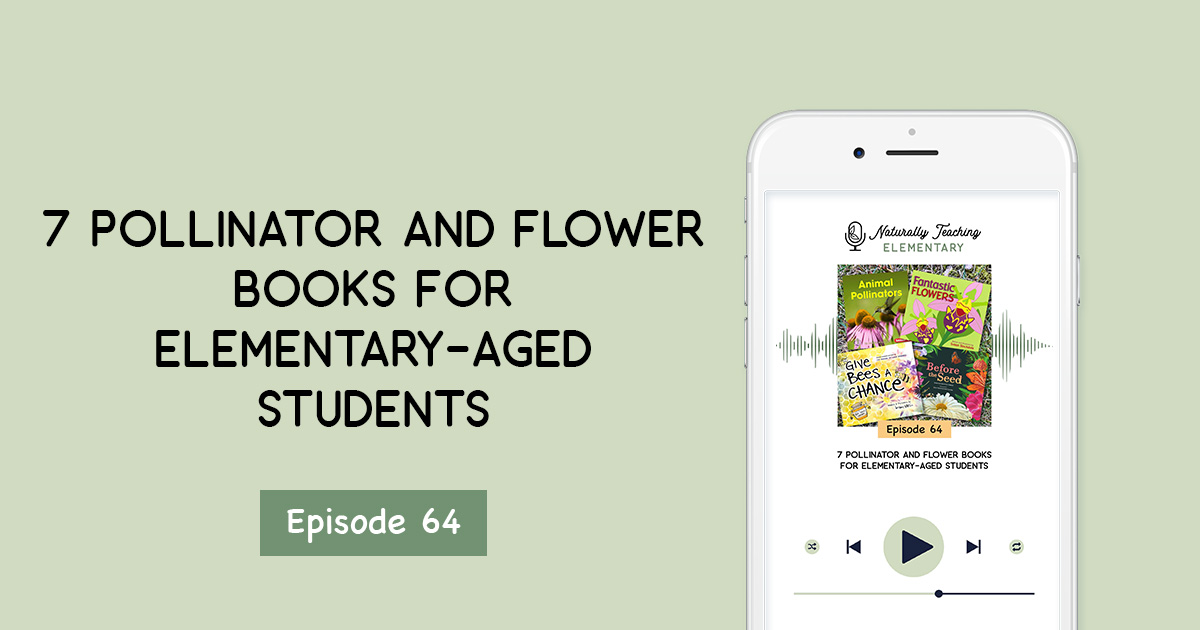
We are officially in spring, and with the changes of the seasons, comes flowers and pollinators! Get your kiddos excited about the shift by reading pollinator and flower books. Then head outside and look for examples!
In this episode, I share 7 pollinator and flower books. Listen in to discover some amazing picture books about flowers, bees, butterflies, bats and more to use this school year!
Pollinator and flower books covered in this episode include:
Extra pollinator and flower books covered in this episode include:
Affiliate Disclosure
I only endorse things that I’ve personally used, come highly recommended by trusted peers, or I’ve done extensive research on. As an Amazon Associate, I may earn commissions from qualifying purchases from Amazon.com. This is at no extra cost to you, the commission is covered by the company.
I am recommending products that I think will be genuinely helpful and useful, and not because of the small commissions that I receive. Please only purchase items if you believe that they will help you achieve your educational goals. If you’d like to learn more, check out my disclaimers page.
[0:00]
Teaching elementary-aged children is a rewarding experience, but as educators and parents, finding the time and resources to create engaging lessons can be a challenge. That's where this podcast comes in. Welcome to Naturally Teaching Elementary.
I'm Victoria Zablocki, a certified elementary teacher turned outdoor educator. With over a decade of experience coaching teachers on effective teaching methods, I'm passionate about teaching the whole child with authentic and place-based experiences in school and home settings. Join me as we explore our strategies for teaching with practical teaching tips, insightful interviews, picture book reviews, and more. So let's grow together.
Hey, everybody. Welcome back to the Naturally Teaching Elementary Podcast. My name is Victoria Zablocki, and I'm your host. We're wrapping up spring break here in our district. Hopefully, that means that you're either getting ready for spring break, already had your spring break, or currently on spring break.
And for all of you teachers, all you homeschool parents, you deserve this break. And hopefully, it's been good to you. With that, I'm excited to say that spring has finally sprung where I'm from, and with it comes flowers.
We're finally starting to see flowers, which means now is a fantastic time to start investigating flowers and pollinators as they both awaken from their winter sleep. It's a magical time, and it also helps kids gather a different sort of understanding than they would later in the year when the flowers are actually up already. And what better way to introduce pollinators and pollination than picture books?
And to help you, the teacher or homeschool parent get inspired, I put together a list of seven pollinator and flower books that provide you pictures and text to explore both of these concepts. And if you've listened to my other episodes about picture books, I'm sure that you've caught on to the fact that I'm very passionate about teaching science concepts with the help of children's literature. And again, it's for good reason.
Research has shown that integrating science and literacy has many benefits, including saving teachers time in their schedule, improved attitudes of children towards science, better overall performance in reading and science, and so many more. For more information about benefits and methods for integrating science and literacy, check out my blog post, “Teaching with Books: How to Integrate Science and Literacy for Elementary Classrooms”. All right, now let's get into these pollinators and flower books.
[2:25]
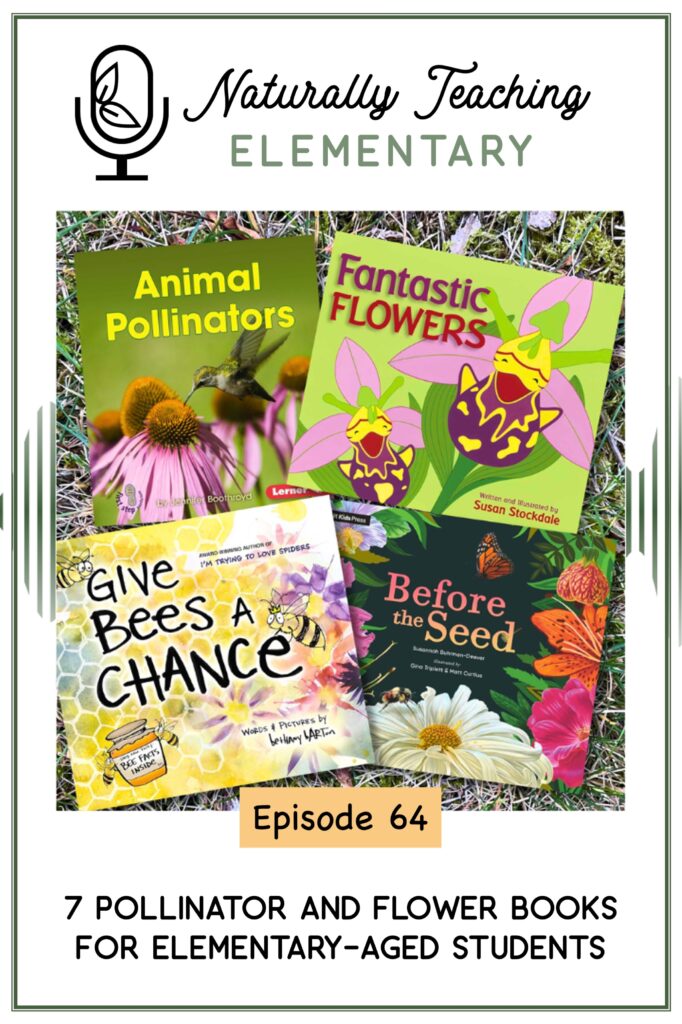
So book number one is called Fantastic Flowers by Susan Stockdale. And this book introduces shapes of flowers with rhythm and rhyme. Stockdale introduces different flowers by describing their shape and comparing it to something the readers are already familiar with.
So some examples from the book include Dutchman's breeches, which are compared to upside down pants. Jack and the pulpits are described as being snakes standing guard. And then trumpet flowers are explained as being heralding trumpets.
This book is short but sweet. It introduces flowers in a different sort of way. Many books introduce flowers first starting with colors.
But this book shows the variety and shape that flowers can come in. And even though it doesn't explicitly say that shape is for a particular reason, it could be a great way to start introducing the pairings of flowers with the pollinators that work with those specific shapes.
[3:21]
Book number two is Flower Talk by Sara Levine, illustrated by Masha D'yans. This book introduces the needs of plants but reminds the readers that plants can't meet their own needs by walking to get them. They're actually stuck in the ground. So the purpose of this story is to share the innovative ways that plants meet those needs, including ways that they attract pollinators to their flowers in order to create seeds.
Levine shares what pollination is, examples of pollinators, how plants trick animals into helping pollinate their flowers, how plants advertise with flowers as the signs, and how flowers give the animals something in return for their services. There's also an explanation that colors are the way that flowers “talk” to animals, including specific colors for different pollinators.
Levine shares that red flowers are typically for birds since insects can't see the color red, blue and purple and yellow are typically for bees, while white, fragrant flowers are typically for moths and bats, brown, fragrant flowers are typically for flies, and then green flowers aren't for any animals as their pollen is typically carried by the wind.
This book concludes with information about pollination, protecting pollinators, and reading about plants and pollinators. This book is an engaging and wonderful way to introduce how plants talk to animals and achieve pollination. The idea of plants talking to attract animals is a bit of an abstract concept, but it's made easier to discuss with younger learners by using this book.
The illustrations are also bright and beautiful, and really bring the concept to life. I would say that this book is probably for second grade and older due to the amount of text on each page, but you could probably paraphrase for younger kiddos.
[5:02]
Book number three is Before the Seed: How Pollen Moves by Susannah Buhrman-Deever, illustrated by Gina Triplett and Matt Curtius. This book has a simple storyline with included insets for more information. Buhrman-Deever explains pollination and how pollen moves in child-friendly ways.
This book introduces how flowers attract animals, including color, scent, and even sound, aka echolocation. And there's in-depth explanations of different pollinators, including bees, butterflies, bats, birds, beetles, moths, flies, as well as specific species examples for each unique plant characteristic described in the text. This book is definitely better for older kids like third grade and up.
It has a lot of great info, but also a lot of text on each page. And the book ends with some natural history information about pollinators, the parts of flowers, and pollination. This book is really wonderful and is chocked full of information.
The illustrations are gorgeous and really help captivate the reader. I love that it has a simple storyline to share the process of flowers attracting animals, and then also those insets that help explain more in-depth information about each of the examples the author wanted to highlight. It's a beautiful, beautiful book.
[6:18]
Book number four is The Story of Honey: It Starts with a Flower by Robin Nelson. And this is a super simplistic take on the process of how honey is made. The story starts with a flower, then a bee visits the flower and drinks nectar, then it goes to a hive, stores the nectar, then the beekeeper takes the honeycomb out and puts the honey in a jar.
This is a short but sweet book with real pictures to help illustrate the process of bees making honey. Without using the vocabulary words associated with pollination, this book introduces pollination and bees' roles in pollinating flowers. It's kind of an in-between book on this list, having obvious ties to both pollination and pollinators.
So, I'm talking about it after our flower books and before our pollinator books. This book is definitely more appropriate for early childhood learners with its simplistic sentences and take on the process.
[7:09]
Book number five is Animal Pollinators by Jennifer Boothroyd. This is a nonfiction picture book that uses real pictures to explain what pollination is and who pollinates flowers. Boothroyd shares a quick and child-friendly definition of what pollination is and how it leads to seeds. She also shares examples of different animals that pollinate flowers, including bats, honey possums, lemurs, lizards, doves, honey creepers, hummingbirds, and humans.
There are vocabulary words throughout the book that are bolded to grab the reader's attention and a glossary at the end. And again, this book is a simplistic nonfiction picture book that introduces the concept of pollinators in a child-friendly way. Boothroyd focuses on animals other than insects in this book, putting a highlight on mammals and birds, which are often glazed over when talked about as pollinators.
There are great pictures to show how pollen sticks to the fur, feathers, and scales of animals, which can help young learners see how pollination can happen by accident. And as a side note, if you like the layout of this book, Boothroyd also has Insect Pollinators to explain about pollinators that are insects. And you could pair both Animal Pollinators and Insect Pollinators for an overall picture of pollinators.
[8:20]
Book number six is Give Bees a Chance by Bethany Barton. And this book is a fun take on bees and their role in nature. The main character spends the book trying to convince his best friend Edgar that bees are awesome and not to be feared.
He talks about all the different kinds of bees that exist, how honey is made, how bees were alive while the dinosaurs were around, the reasons bees may sting, how bees help us have food to eat, and how bees are being negatively affected by different factors. And it ends with ways that we can help keep bees safe. This book is a great way to acknowledge the fact that many of your learners are probably afraid of bees, but that we can all still give bees a chance.
There are also fantastic facts hidden in the conversation between the main character and Edgar that can help your learners uncover what pollination is and the important role that bees have in nature. It's funny, engaging, and interactive with opportunities to add movement to their reading. And if you like the sounds of this book, Barton has some other amazing titles, including I'm Trying to Love Spiders, I'm Trying to Love Rocks, I'm Trying to Love Germs, I'm Trying to Love Garbage, and more.
[9:27]
Book number seven is What If There Were No Bees? by Suzanne Slade, illustrated by Carol Schwartz. This book is a look at the role pollination and bees have in the grassland food web. There's a diagram to show how flowers and bees belong to many different food chains in grasslands, illustrating just how important they are.
Slade explains what a keystone species is and that bees are actually a keystone species in grasslands. She also introduces what could happen if bees went extinct. And then Schwartz illustrates that by using black silhouettes to show the animals and plants that would be affected if there were no bees.
This book is an interesting take on pollination and pollinators. Not only do learners discover what pollination is, but this book takes it to the next level and shows the impact that the absence of pollination and bees would have. This can help your older learners start to make some new connections with information they've been learning for years.
Although there isn't a ton of text on each page, the concepts of this book are a little more advanced and would probably be better suited for second graders and up.
[10:26]
So in a nutshell, today we talked about seven pollinator and flower books for elementary aged students. Titles that were summarized include Fantastic Flowers by Susan Stockdale, Flower Talk by Sara Levine, illustrated by Masha D'yans, Before the Seed: How Pollen Moves by Susannah Buhram-Deever, illustrated by Gina Triplett and Matt Curtius, The Story of Honey: It Starts with a Flower by Robin Nelson, Animal Pollinators by Jennifer Boothroyd, Give Bees a Chance by Bethany Barton, and What If There Were No Bees? by Suzanne Slade, illustrated by Carol Schwartz.
And if you're looking for more pollinator and flower books, check out my podcast episode number 43: 9 Spring Picture Books to Help You Introduce Seasonal Signs, Plants and Animals in Spring on naturallyteaching.com or follow the link in the show notes.
I also have the articles, “A Fantastic Spring Picture Book List for Elementary Teachers with 20 Titles”, “11 Fantastic Animal Life Cycle Books by John Himmelman”, “Pollination for Plants: How to Use Flowers Are Calling for Effective Teaching”, and “How Butterflies Grow: 8 Picture Books About Life Cycles” that could help you find some more helpful options as well. So thanks for taking time to listen today. I know you're busy and I truly appreciate the time you take to tune in.
If you have any questions, wonderings or pollinator and flower books that you use, get a hold of me on Instagram at naturally.teaching, or you can email me at victoria@naturallyteaching.com. And don't forget to check out the show notes for this episode at naturallyteaching.com/episode64 for all the links that I've mentioned during the episode. So thanks again for joining me today.
And until next time, keep exploring, keep learning, and keep Naturally Teaching. Thank you so much for tuning in to today's episode of the Naturally Teaching Elementary Podcast. I hope you found it informative, inspiring, and full of actionable insights to enhance your teaching journey.
Connect with me on social media for more updates, science tidbits, and additional resources. You can find me on Instagram and Facebook at naturally.teaching. Let's continue the conversation and share our passion for teaching elementary-aged children together.
Don't forget to visit my website at naturallyteaching.com for all the show notes from today's episode. If you enjoyed today's episode, please consider leaving a review on your favorite podcast platform. Your feedback helps me improve and reach more educators like you.
Thank you again for listening, and until next time, keep exploring, keep learning, and keep Naturally Teaching.

0