![Exploring Invertebrates: 10 Picture Books to Introduce Animal Characteristics [ep. 9]](https://www.naturallyteaching.com/wp-content/uploads/2024/07/exploring-invertebrates-books-header-300x200.png)
Science
Frogs and Toads Together: Why do Amphibians Group Up?April 11, 2025

An elementary teacher science blog
Affiliate disclosure: As an Amazon Associate, I may earn commissions from qualifying purchases from Amazon.com. This is at no extra cost to you. If you’d like to learn more, check out my disclaimers page.
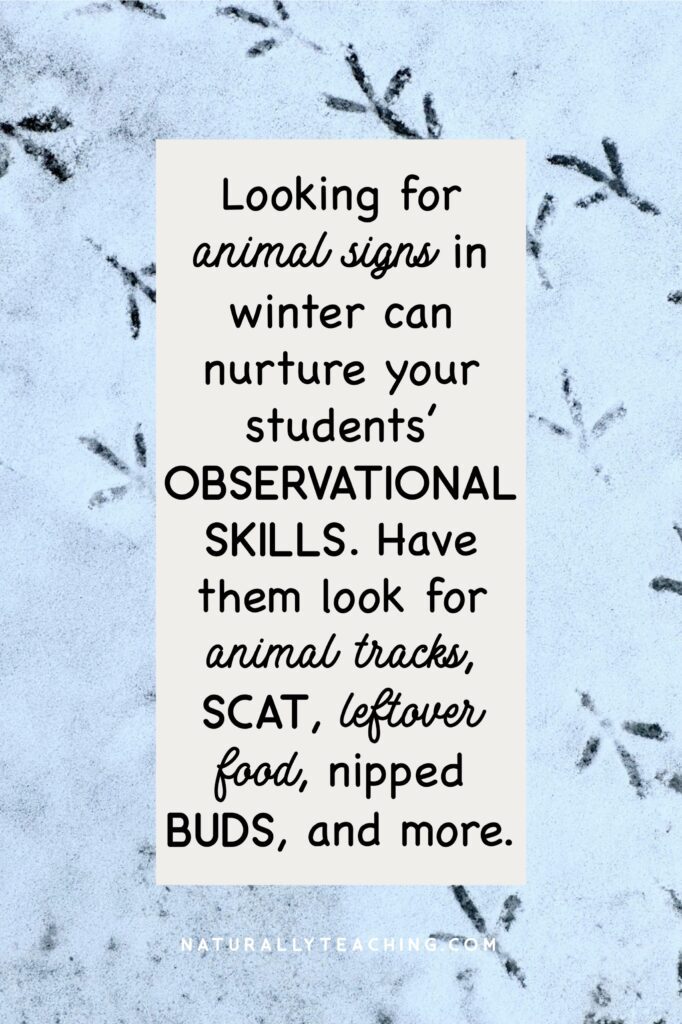
Animals seem very few and far between in winter; who can blame them? It’s cold, windy, icy, and animals’ food and water are scarce. Even with those odds stacked against them, there are still plenty of animals adapted to survive winter’s harshness. And the ones that are still moving around leave behind clues that your students can find!
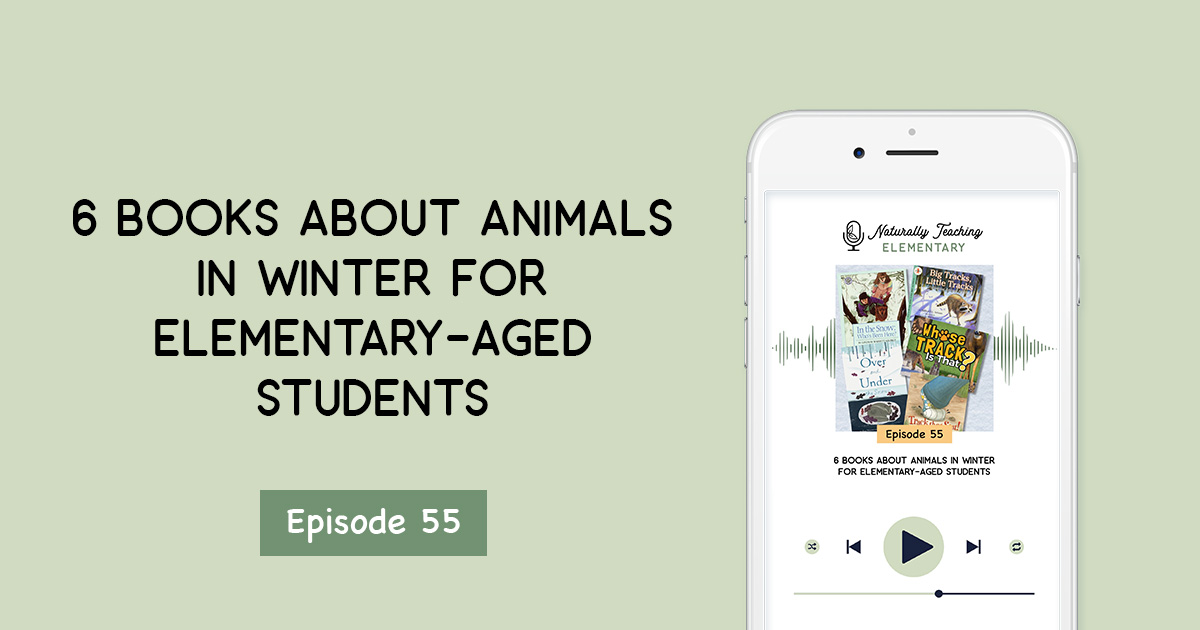
In this episode, I share 6 books about animals in winter that uncover the signs they leave behind. Listen in to discover some amazing picture books about tracking, scat, and more to use this school year!
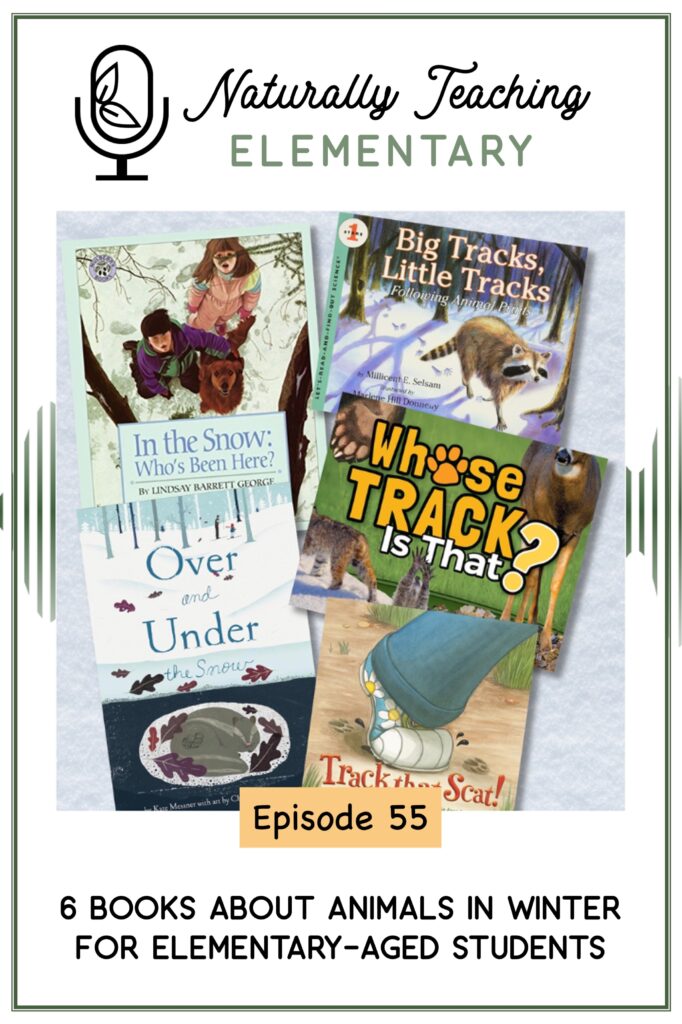
Books about animals in winter covered in this episode include:
Affiliate Disclosure
I only endorse things that I’ve personally used, come highly recommended by trusted peers, or I’ve done extensive research on. As an Amazon Associate, I may earn commissions from qualifying purchases from Amazon.com. This is at no extra cost to you, the commission is covered by the company.
I am recommending products that I think will be genuinely helpful and useful, and not because of the small commissions that I receive. Please only purchase items if you believe that they will help you achieve your educational goals. If you’d like to learn more, check out my disclaimers page.
[0:00]
Teaching elementary-aged children is a rewarding experience, but as educators and parents, finding the time and resources to create engaging lessons can be a challenge. That's where this podcast comes in. Welcome to Naturally Teaching Elementary.
I'm Victoria Zablocki, a certified elementary teacher turned outdoor educator. With over a decade of experience coaching teachers on effective teaching methods, I'm passionate about teaching the whole child with authentic and place-based experiences in school and home settings. Join me as we explore our strategies for teaching with practical teaching tips, insightful interviews, picture book reviews, and more. So let's grow together.
All right. Welcome back to the Naturally Teaching Elementary podcast. My name is Victoria Zablocki and I'm your host. So here in Michigan, we're in the thick of winter, crazy cold temperatures, at least for us anyway, wind storms, snow storms, freezing rain. It makes you wonder what animals are crazy enough to endure the winter weather all season long.
Sometimes we as humans wonder if there are even animals active in winter since they seem to be so few and far between. They're there, whether we see them or not. And the animals that are awake leave behind traces and clues that they're around.
These little gems can be just the hook your learners need to start in on some amazing inquiry-driven studies. So to help you, the teacher or homeschool parent, get inspired, I put together a list of six books about animals in winter for elementary-age students that share signs that animals are active in this season of scarcity and cold. These books hit on signs like tracks and how to track, as well as scat, leftover food, feathers, and more.
And if you've listened to my other episodes about picture books, I'm sure that you've caught on to the fact that I'm very passionate about teaching science concepts with the help of children's literature. And that's for good reason. Research has shown that integrating science and literacy has many benefits, including saving teachers' time in their schedule, improved attitudes of children towards science, better overall performance in reading and science, and so many more.
For more information about benefits and methods for integrating science and literacy, check out my blog post, “Teaching with Books: How to Integrate Science and Literacy for Elementary Classrooms.” Alright, now let's get into this.
[2:16]
So book number one is In the Snow: Who's Been Here? by Lindsay Barrett George. This book follows a brother and sister named William and Cammy as they go to sled on a hill. While they make their way to the hill, they see a variety of animal signs during winter, including ruffed grouse tracks in the snow, sumac seeds on the ground from a cardinal, a leafy nest from gray squirrels, cut hemlock branches at the bottom of a tree from a porcupine, a great horned owl pellet, a snow tunnel created by a chipmunk, tracks going in and out of the water left by a mink, and bark rubbed off a birch tree by a deer.
This is a great book to introduce a variety of signs left behind by animals in winter. A lot of people think about tracks in the snow, but there's so many more kinds of signs that can be left behind, and this book delivers.
Not only does it show what animal clues to look for in winter, but it also introduces common animals that can be found in winter, which is helpful. I love this book and find it works well for kids of all ages. Also, as a bonus, if you like this book, it's actually part of a set of books about animal signs, including In the Woods: Who's Been Here, Around the Pond: Who's Been Here, and In the Garden: Who's Been Here.
[3:29]
Book number two is Big Tracks, Little Tracks by Millicent E. Selsam, illustrated by Marlene Hill Donnelly. This book starts with a kid-friendly description of a detective and encourages the reader to be a nature detective by looking for signs of animals active in winter. Each spread explains different properties of tracks, including felines pulling their claws in when they walk, big feet making big tracks and little feet making little tracks, descriptions about how some animals put their back feet in front of their front feet like rabbits, the way that webbed feet leave special tracks, and tracks accompanied by other items like shells.
Selsam also encourages the readers to use their senses of looking, listening and smelling to find clues of animals that are active in winter. Some of the spreads also provide opportunities to practice using the readers' newly acquired information about tracking.
To me, this book would probably be a better option for older students due to the amount of information on each page as well as how in-depth the tracking information is. I love that Selsam presents information to help the reader learn specifics about different kinds of tracks and then gives them the opportunity to practice the new information with track stories. This book takes place in all seasons, showing tracks and signs in the snow as well as in the mud.
[4:46]
Book number three is Over and Under the Snow by Kate Messner, illustrated by Christopher Silas Neal. Messner shares a variety of animals that are active during winter in this comparison story. The main character is skiing with her dad through the woods and notices animals above the snow and how they're interacting with the winter scenery. As they ski, the dad shares his knowledge of the subnivean layer, a secret kingdom below the snow that animals use to survive winter. Some of the animals and signs of their activity shared in this storyline include tunnels from squirrels into the subnivean layer, deer tracks, a deer bed in the snow, beaver lodges and fox tracks. There's also a variety of animals that are inactive during the winter and can be seen in the illustrations and discussed through the storyline.
This book is a great introduction to animals that are active in winter and different signs that they're around. The illustrations by Christopher Silas Neal also carry a lot of significance and understanding of animals and what they're doing in winter. They give the reader an x-ray view into the ground and snow layer to understand what these animals are doing even if they can't be seen by the skier.
This is one of my all-time favorite books about animals in winter. And if you like the sounds of this book, check out my “Over and Under the Snow Picture Book Companion for Third Grade” on Teachers Pay Teachers. It includes activities such as answering key questions about the text, sharing how pictures help tell the story, a short research project about an animal from the book, designing a winter habitat for that animal, building a model of their habitat, observing winter animals in your schoolyard, winter weather data collection, and graphing the winter weather data. And I'll make sure to put a link for this in the show notes if you're interested in checking it out.
[6:21]
Book number four is Track That Scat! by Lisa Morlock, illustrated by Carrie Ann Bradshaw. This book follows a little girl named Finn, who just got new boots, and she goes for a walk with her dog Skeeter.
While out on her walk, she finds a bunch of different kinds of scat in all different shapes. The scat that she finds includes rabbit scat, goose scat, raccoon scat, red fox scat, skunk scat, and chickadee scat. There are other signs of animals too, including feathers, tracks, and leftover food.
Each page includes insets with natural history information about each species. This book is a fun book for kiddos, as it's an educational book about poop. Scat is a scientific name for poop and is a great sign of active animals. Although this book isn't set in winter, searching for and identifying scat is a great animal sign to look for in winter, and this book gets children started on developing the scientific skill.
[7:15]
Book number five is Whose Track is That? by Stan Tekiela. And this book includes real pictures and hints to help their readers decide whose track is in the picture. Tekiela includes pictures of tracks from many different animals, including earthworms, white-tailed deer, bobcats, raccoons, Canada geese, black bear, dogs, beaver, robins, otters, and bullfrogs.
The hints on each spread include natural history information about each species as a way to jog the reader's mind and get them guessing. And the guess-who style of this book keeps children really engaged. The use of real pictures also keeps the readers' attention because they can see that these tracks are in fact actual tracks of actual animals. This book also is not set in winter, but there are tracks in the snow and many of the species can be found awake in wintertime.
If you're interested in this book, you can check out a YouTube video of Stan Tekiela, the author, reading the book aloud. And I'll make sure to include a link for this video in the show notes as well.
[8:14]
Book number six is Animal Tracks Activity Book by Brett Ortler, illustrated by a team of four. This book isn't a picture book, but it's more a teacher resource book. This activity book is full of coloring and activity pages, all about tracking. It starts with a background on what tracking is and how it was used historically.
It then moves into the characteristics of tracks and what to look for to be able to identify them. There are activities for measuring tracks, looking at track shapes, looking for signs other than tracks, a word search, a maze, and more. This is a great supplement to your current activities and could even work for centers if that would work better in your schedule.
[8:52]
So in a nutshell, we talked about six books about animals in winter for elementary age students. Titles that were summarized include. In the Snow: Who's Been Here? by Lindsay Barrett George, Big Tracks, Little Tracks by Millicent E. Selsam, illustrated by Marlene Hill Donnelly, Over and Under the Snow by Kate Messner, illustrated by Christopher Silas Neal, Track That Scat! by Lisa Morlock, illustrated by Carrie Ann Bradshaw, Whose Track Is That? by Stan Tekiela, An Animal Tracks Activity Book by Brett Ortler, and a team of four illustrators.
And if you're looking for more winter picture books, check out my article “16 Wonderful Children's Books About Winter for Elementary Teachers” on naturallyteaching.com or you could follow the link in the show notes. You could also check out episode 34, “9 Winter Picture Books to Help Introduce Seasonal Signs, Snow and Animals in Winter”, which include more books about winter as well.
And if you're looking for activities to go along with Over and Under the Snow by Kate Messner, Illustrated by Christopher Silas Neal, go back and check out my article “Over and Under the Snow by Kate Messner: Teaching Animal Adaptations”. And then I also have that teaching resource I mentioned, “Over and Under the Snow Picture Book Companion for Third Grade”. And that includes made for you science and ELA activities.
So thanks for taking time to listen today. I know you're busy, and I truly appreciate the time you take to tune in. If you have any questions, wonderings, or books about animals in winter that you use, get ahold of me on Instagram at Naturally.Teaching, or you can email me at victoria@naturallyteaching.com.
And don't forget to check out the show notes for all those links that I talked about at naturallyteaching.com/episode55. So thanks again for joining me today. And until next time, keep exploring, keep learning, and keep naturally teaching.
Thank you so much for tuning in to today's episode of the Naturally Teaching Elementary Podcast. I hope you found it informative, inspiring, and full of actionable insights to enhance your teaching journey. Connect with me on social media for more updates, science tidbits, and additional resources. You can find me on Instagram and Facebook at naturally.teaching.
Let's continue the conversation and share our passion for teaching elementary-aged children together. Don't forget to visit my website at naturallyteaching.com for all the show notes from today's episode. If you enjoyed today's episode, please consider leaving a review on your favorite podcast platform.
Your feedback helps me improve and reach more educators like you. Thank you again for listening, and until next time, keep exploring, keep learning, and keep naturally teaching.

0