![Exploring Invertebrates: 10 Picture Books to Introduce Animal Characteristics [ep. 9]](https://www.naturallyteaching.com/wp-content/uploads/2024/07/exploring-invertebrates-books-header-300x200.png)
Science
Frogs and Toads Together: Why do Amphibians Group Up?April 11, 2025

An elementary teacher science blog
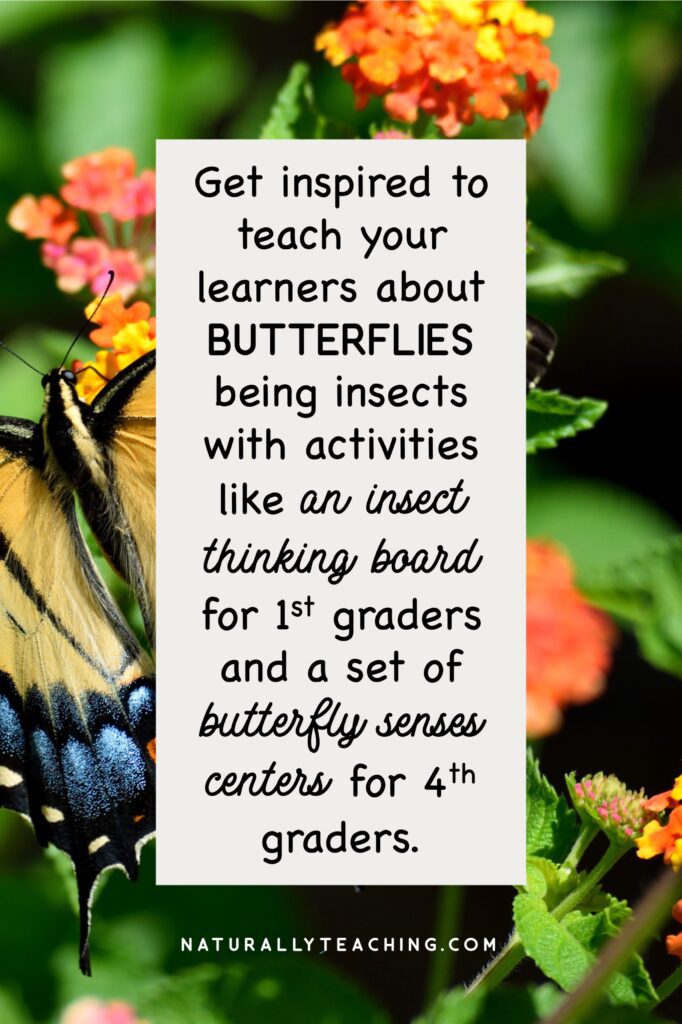
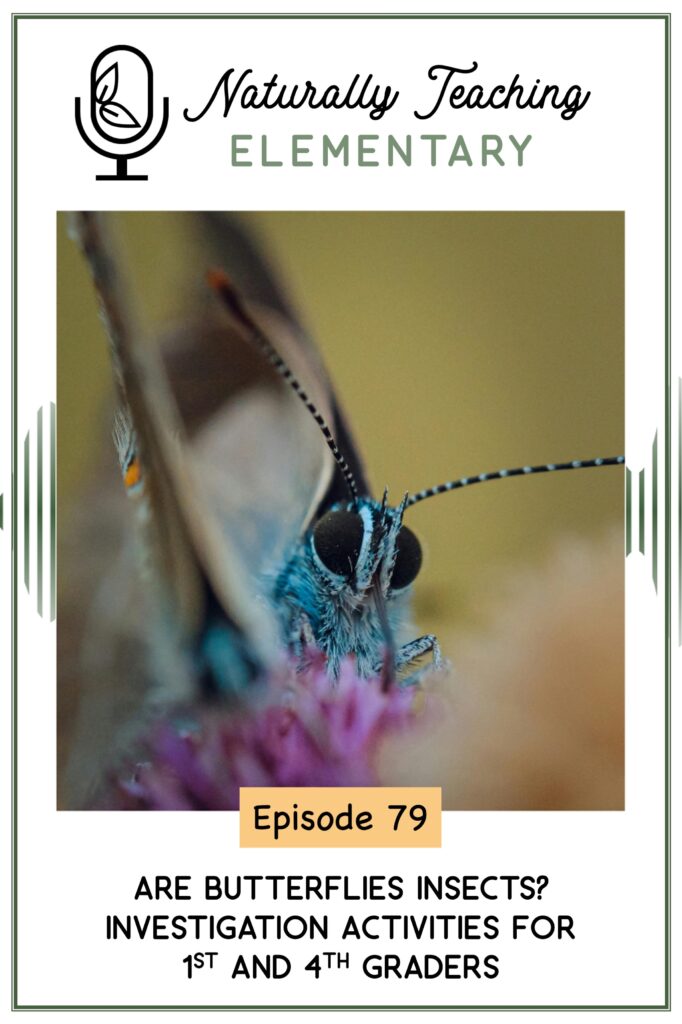
Are butterflies insects? While you likely know the answer (yes, they are), it is a great phenomenon to investigate with your learners. Plus, some of the characteristics that they have that identify them as insects provide very interesting opportunities for your kiddos. And I’m here to help you get started with your butterfly-related investigations!
In this episode, we’ll talk about activities to investigate “are butterflies insects?”, characteristics of insects compared to butterfly characteristics, and how butterflies sense the world. I’ll share the standard that inspired the activity, how they relate to butterflies being insects, and how you can share those activities with your learners’ families.
In this episode, I discuss the following standards connected to activities to investigate “are butterflies insects?”:
[0:00]
[0:00]
Teaching elementary-aged children is a rewarding experience, but as educators and parents, finding the time and resources to create engaging lessons can be a challenge.
That's where this podcast comes in. Welcome to Naturally Teaching Elementary. I'm Victoria Zablocki, a certified elementary teacher turned outdoor educator.
With over a decade of experience coaching teachers on effective teaching methods, I'm passionate about teaching the whole child with authentic and place-based experiences in school and home settings.
Join me as we explore strategies for teaching with practical teaching tips, insightful interviews, picture book reviews, and more. So let's grow together.
Hey everybody, welcome back to the Naturally Teaching Elementary podcast. My name is Victoria Zablocki and I'm your host. So last week in episode 78, I shared activities to investigate butterflies with orange and other adaptations for kindergarten and third graders.
This week, I'm excited to bring you activities that investigate the question, “are butterflies insects?” And although we're talking about butterflies and butterfly activities in July, when you likely don't have kids, I decided to do this now partially to promote the North American Butterfly Count that's happening this month, but also partially because it's a great time of year to snag random props from garage sales, thrift shops, or Facebook marketplace.
Teaching the characteristics of insects and their unique body parts can be aided with props, especially for our early childhood learners. Not to say that you should go out and spend a bunch of money. You know me, I like to help you save your hard-earned cash, but if you get inspired by some of my suggestions, you could take advantage of the wonderful opportunities summer has to offer.
So listen now and come back later in the school year to remind yourself of the activity you'd like to include in your studies and also why you bought that random butterfly puppet.
So in this episode, I'm going to describe activities that help answer the question, “are butterflies insects?” for grades first and fourth. For each activity, I'll share the Next Generation Science Standard that inspired that activity, as well as the scientific phenomenon that the activity helps explain.
And make sure that you listen through to the end of the episode, because even though I've paired these activities to particular standards, you may find yourself inspired to use a similar concept for your curriculum or even use the same activity for a different grade. Now let's get into these activities to explore the question, are butterflies insects?
[2:19]
So for first grade, the Next Generation Science Standard that I pulled was 1-LS3-1: Make observations to construct an evidence-based account that young plants and animals are like, but not exactly like, their parents.
For first grade, I would suggest an activity that helps answer the question, “are butterflies insects?”, by starting with a thinking board that goes a little further back, focusing on the question, “what is an insect?”
Before I explain the activity, though, I just wanted to share a little background on thinking boards. In Next Generation Science Standards, a thinking board is a student-centered tool that makes student reasoning and thinking visual, dynamic, and collaborative. This could take the form of a poster, a bulletin board, a graphic organizer, or another visual option.
The key aspects of a thinking board to keep at the forefront of your mind as the educator is that it's student-generated and maintained, the educator doesn't “filter” through the thoughts or learning occurring, and evolution of your student's learning is shown in some sort of visual way.
So going back to my initial thought, I would suggest starting with a thinking board that's asking the question, “what is an insect?” Tell your learners that they're going to investigate something called an insect, and you want to be careful not to give away too much information, so try to avoid saying that you're going to investigate an animal called an insect, instead just let them know that they're going to investigate something called an insect.
Tell them to think about what an insect is to them, then work together to start your class or homeschool family thinking board. How do they want to represent their thoughts? Do they want to use sticky notes on a board, or do they want to use a KWL chart? Or would they rather create a diagram of an insect?
Remember the thinking board is a place for your learners to take ownership, and they should decide how they want to share their learning journey. After the majority of your learners agree how they'd like to represent their learning, start having them record their initial thoughts. Remember, you want to let this process happen unfiltered.
They may write down that an insect is an animal, or they may write down that spiders are insects, or they may write that insects have 100 legs. Let those thoughts find their space on the thinking board. The goal of this board is to keep their thinking at the forefront of their minds, but also help them document their progress - and all learning deserves celebration.
As you continue learning about insects, make sure to check back on your thinking board and double check their previous thoughts. The children should be in charge of deciding if their previous thoughts are factually accurate from their learning, if they need some adjustments, or if they still don't have enough information to make any assessments.
After you've studied insects and worked through their thinking board, hopefully they'll have uncovered that insects have six legs, three body parts, compound eyes, an exoskeleton, and sometimes they have wings.
Once your learners have a good handle on what makes an insect an insect, circle back to answer the question, “are butterflies insects?” They can use the thinking board to evaluate whether or not a butterfly is an insect, and by checking their thinking against butterflies, they'll be double checking their learning while also applying their newfound knowledge in a critical way.
[5:19]
For fourth grade, the Next Generation Science Standard that I pulled was 4-LS1-2:
Use a model to describe that animals receive different types of information through their senses, process the information in their brain, and respond to the information in different ways.
So for fourth grade, I would suggest doing a set of centers focused on butterfly senses. Butterflies have similar senses to humans, including touch, hearing, sight, and taste. All butterflies are insects, and sense the world in a different way than we do.
Even though they can sense touch, they do so with hairs on their exoskeleton instead of their hands, and even though they can hear, they do so with veins in their wings. Even though butterflies can see, they do so with compound eyes, which have thousands of equivalents to lenses.
And even though they can taste, they do so with chemoreceptors that are on their bodies. These are nerve cells that open on the surface of the exoskeleton and react to the presence of different chemicals. Scientists have even described them as being similar to a lock-and-key system.
They can taste with chemoreceptors on their feet when the right “key” matches to the right “lock”, meaning when a particular chemical runs into a chemoreceptor, it fits into a lock on the nerve and sends a message to the nerve cell telling the butterfly that it has encountered the chemical. They can also smell through their antennae, appendages that are covered with chemoreceptors that can sense odor associated with nectar and feeding.
So back to the centers, I would suggest providing goofy but memorable ways to interact with butterfly senses at each center. You could label each center with the human sense and the way we experience it, and then have an interactive activity for them to switch roles and experience each sense through the body of a butterfly.
So as a human, we use our hands, fingers, and skin to touch - as a butterfly, like I said, they use hairs on their exoskeleton. Consider providing your learners gloves that you hot glue small clippings of fuzzy sticks to to create reactive hairs. Put a few items at the center that they can “feel” using the gloves with stiff hairs by rubbing it across the different objects.
As a human, we use our tongues to taste - and as a butterfly, they use their feet. Provide your learners a couple of faux flowers or pictures of flowers along with a fake butterfly and have them “taste” the flowers with the butterfly feet.
Alternatively, you could make it more interactive and tape fake flowers on the ground and have them pretend to flit from flower to flower, tasting the flowers as they go.
As a human, we use our ears to hear - and as a butterfly, they use veins on their wings. Have your learners amplify sound by cupping their ears with their hands, or in this case, we're going to pretend they're wings, to move the sound toward their processing point, which happens to be their human ears. But the surface area of the hands suggests the shape of wings.
Alternatively, you could have them create a comic strip with a few frames that illustrates a punny butterfly joke involving hearing with their wings.
As a human, we use our eyes to see - and as a butterfly, they also use eyes to see, but they have many more lenses and see many more objects at once.
To give them this experience, you could look this summer for kaleidoscopes or small plastic “bug eyes” that take your one lens vision and multiply it.
And lastly, as a human, we use our nose to smell - as a butterfly, they use their antennae to smell. Provide your learners a variety of objects that they can use to try to get a whiff of something really stinky by extending their nose. You'll want to make sure that you provide a bunch of each material, I'm thinking toilet paper rolls, paper towel rolls, straws, etc., and have them dispose of the materials once they're done.
With this station, you may have to go over some safety rules, including not sticking things up their nose, just adding to things outside of their nose. With everything set up, have your learners explore the senses of butterflies and watch their minds be blown!
[8:58]
So in a nutshell, today we talked about activities for 1st and 4th grade and how they help answer the question, “are butterflies insects?” For 1st grade, we talked about an insect thinking board with a review of whether butterflies were insects or not. And for 4th grade, we talked about a set of butterfly senses centers.
If you're looking for a way to review the characteristics of insects after your thinking board experience, check out my Insect Characteristic Booklet on Teachers Pay Teachers. It could help your learners double check their learning and also evaluate if butterflies are insects too.
So thanks for taking time to listen today, I know you're busy and I truly appreciate the time you take to tune in. If you have any questions, wonderings, or activities to investigate are butterflies insects that you use, get a hold of me on Instagram at naturally.teaching or you can email me at victoria@naturallyteaching.com.
And don't forget to check out the show notes for this episode and naturallyteaching.com/episode79 for all the links that I mentioned. So thanks again for joining me today and until next time, keep exploring, keep learning and keep naturally teaching.
Thank you so much for tuning in to today's episode of the Naturally Teaching Elementary Podcast. I hope you found it informative, inspiring, and full of actionable insights to enhance your teaching journey.
Connect with me on social media for more updates, science tidbits, and additional resources. You can find me on Instagram and Facebook at naturally.teaching. Let's continue the conversation and share our passion for teaching elementary age children together.
Don't forget to visit my website at naturallyteaching.com for all the show notes from today's episode. If you enjoyed today's episode, please consider leaving a review on your favorite podcast platform.
Your feedback helps me improve and reach more educators like you. Thank you again for listening and until next time, keep exploring, keep learning, and keep naturally teaching.

0