Science
Frogs and Toads Together: Why do Amphibians Group Up?April 11, 2025

An elementary teacher science blog
Flowers are the seed-making parts of plants, but most can’t do it alone! Enter the pollinators. The mutual relationship between flower and pollinator is something to behold and can help teach many different concepts in elementary school. So let’s take advantage of spring to investigate the pollination of flowers and how it relates to elementary curriculum!
In this episode, we’ll talk about activities to teach the pollination of flowers that are paired with Next Generation Science Standards for grades 2nd and 5th. I’ll share the standard that inspired the activity, how the activity relates to the pollination of flowers, and descriptions of how to use the activity with your learners.
The following standards are paired with activities about the pollination of flowers:
[0:00]
Teaching elementary-aged children is a rewarding experience, but as educators and parents, finding the time and resources to create engaging lessons can be a challenge. That's where this podcast comes in. Welcome to Naturally Teaching Elementary.
I'm Victoria Zablocki, a certified elementary teacher turned outdoor educator. With over a decade of experience coaching teachers on effective teaching methods, I'm passionate about teaching the whole child with authentic and place-based experiences in school and home settings. Join me as we explore strategies for teaching with practical teaching tips, insightful interviews, picture book reviews, and more.
So let's grow together. All right. Welcome back to the Naturally Teaching Elementary podcast.
My name is Victoria Zablocki and I'm your host. So if you listened to last week's episode, episode 66: How Flowers Attract Pollinators: First and Fourth Grade Next Generation Science Standard Activities, you heard a couple ideas of activities to introduce the fact that flowers attract pollinators for first and fourth graders. This week, we'll continue the theme of pollinators and flowers, but more specifically, we'll focus on the actual pollination of flowers in connection to second and fifth grade Next Generation Science Standards.
Second and fifth grade standards focus more on the pollination and the flow of energy from sun to animals and spring flowers are one of the greatest opportunities of the school year to explore both those concepts. So in this episode, I'm going to describe pollination of flowers activities for grades second and fifth. For each activity, I'll share the Next Generation Science Standard that inspired that activity as well as the scientific phenomenon that the activity helps explain.
And make sure that you listen through to the end of the episode, because even though I paired these activities to particular standards, you may find yourself inspired to use a similar concept for your curriculum or even use the same activity for a different grade. Also, if you're new to taking your students outside for learning, check out Episode 6, Five Outdoor Education Safety Tips for Teaching Outside, for suggestions to make teaching outside easier. Now, let's get into these pollination of flowers activities.
[2:01]
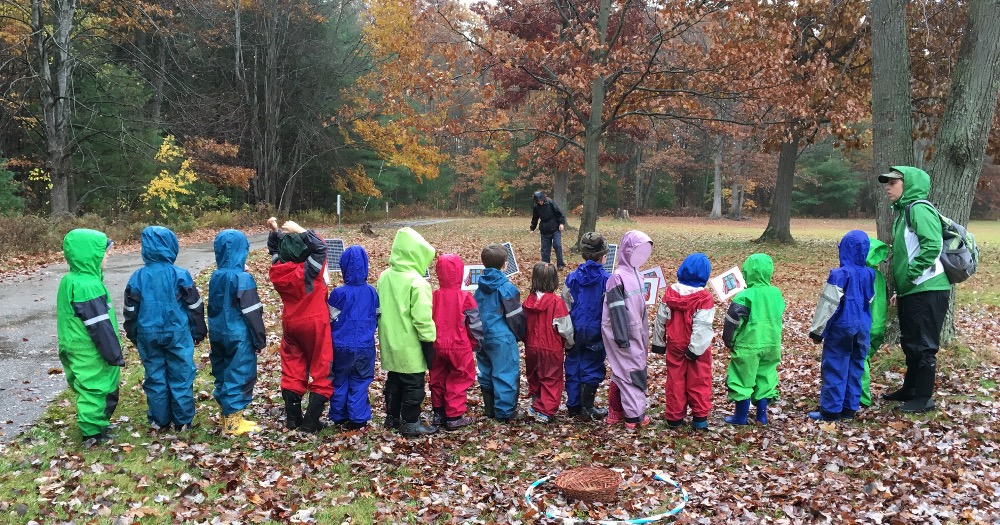
So for second grade, the Next Generation Science Standard that I pulled was 2-LS2-2: Develop a simple model that mimics the function of an animal in dispersing seeds or pollinating plants. So for second grade, I would suggest having your learners do a pollination scavenger hunt if you're in the introductory stage of teaching pollination. To start introducing pollination, you can add different aspects of pollination to your scavenger hunt to get your learners looking closely at nature.
Flower shape, color, and types of pollinators are a great place to start, and they're more open-ended options than looking for specific flowers or specific species of pollinators. So some different shapes of flowers you can include on your scavenger hunt could be clusters, landing pads, tubular flowers, flat flowers, and bowl-shaped flowers. Each of these shapes of flowers can attract different kinds of pollinators.
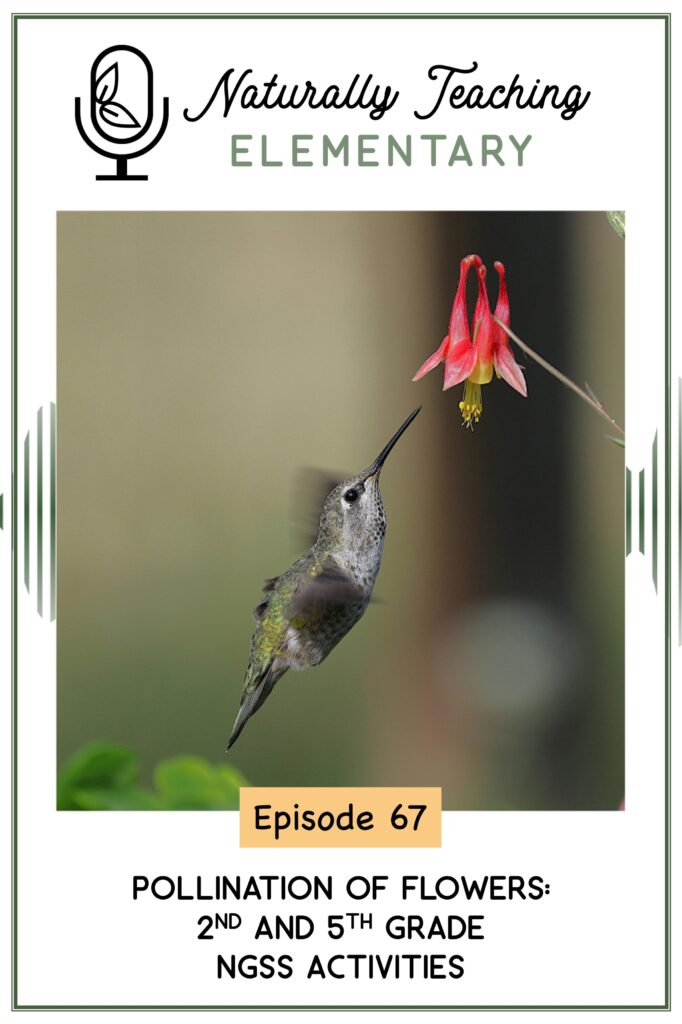
As an example, tubular flowers could attract an animal with a long mouth part, such as a hummingbird, whereas a flat landing pad flower would attract bees and butterflies. Colors that attract pollinators could include red, orange, yellow, blue, purple, pink, and white. Green flowers are typically pollinated by the wind and don't usually have pollinator visitors.
Some flowers also have extra colorations to help pollinators find what they're looking for, including bulls-eye patterns and nectar guidelines to direct pollinators to the sweet stuff inside, brushing them past the pollen. Lastly, some different pollinators that you can put on your scavenger hunt include hummingbirds, Baltimore orioles, nectar-feeding bats, bees, butterflies, beetles, wasps, flies, mosquitoes, and some species of lizards. Bats and lizards, though, are going to be really a niche thing.
And if you're trying to keep your scavenger hunt place-based, you'd have to do some research to determine if bats or lizards should be on your list. Here in Michigan, I wouldn't be able to add them to my scavenger hunt if I wanted to make sure I only had examples of pollinators from this area. After you've developed your scavenger hunt, let your learners know that they'll be going outside to find different flowers that are attracting animals and also the animals that pollinate those flowers.
Pass out a scavenger hunt to each kiddo and show them their exploration space using natural boundaries like fence lines, tree lines, shrubs, wood chips, etc. Let them look around for the different scavenger hunt items, and walk around and check in on them to see what they're finding. After they've had time to look for pollinators and flowers, come back together to have a group discussion on what they found.
What shapes of flowers did they find? What flower colors couldn't they find? How many different kinds of animal pollinators did they see?
And if you like the sounds of this activity, but you don't think you'd have time to make a scavenger hunt, check out my store on Teachers Pay Teachers. I have a made-for-you outdoor pollination scavenger hunt for second grade that you can buy, print, and use. It comes in black and white to save you ink and color for full-on exploration. And I'll make sure to put that link in the show notes if you're interested.
[4:52]
For fifth grade, I actually pulled two Next Generation Science Standards. The first one is 5-PS3-1: Use models to describe that energy in animals' food used for body repair, growth, motion, and to maintain body warmth was once energy from the sun. And the second one is 5-ESS3-1: Obtain and combine information about ways individual communities use science ideas to protect the earth's resources and environment.
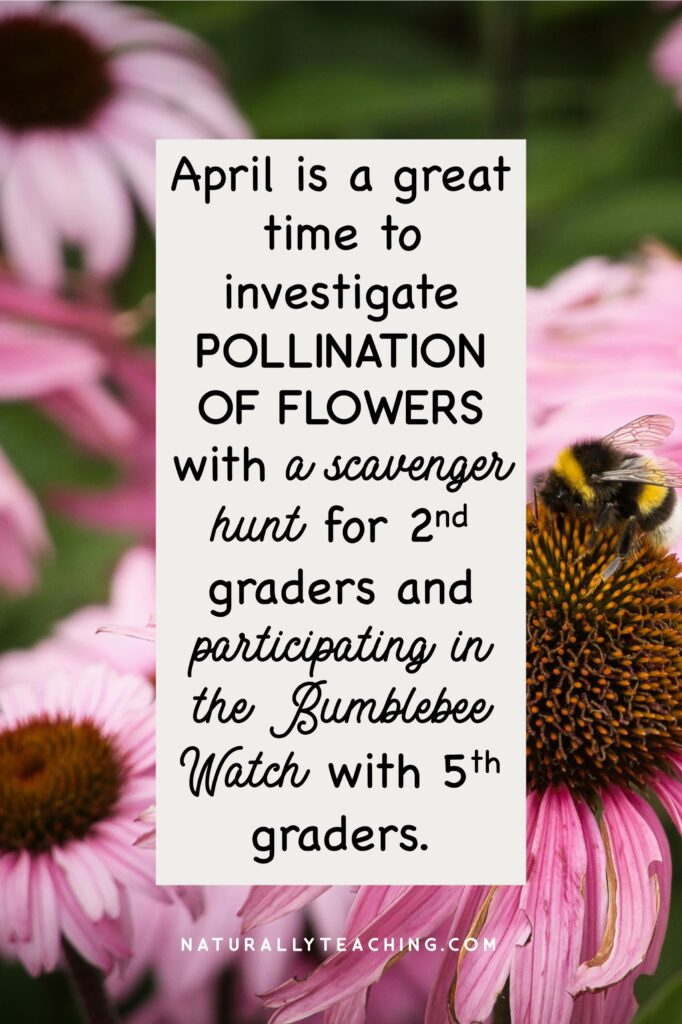
So for fifth grade, I'm going to suggest another citizen science project. Hear me out, though. This has got to be the easiest to participate citizen science project that I've suggested so far. It's called Bumblebee Watch. And all you have to do is take pictures of bumblebees and submit them to the project. That's literally it.
So if you have digital cameras, iPads or some other digital picture taking device, have your learners watch flowers, take pictures of the bumblebees that visit, and upload their pictures to the project. Boom, done. This relates to the two standards because the bumblebees are likely going to be seen at a flower eating.
It's getting its energy from the plant, which got its energy from the sun. Your learners can make a drawing of the way the energy moved from the sun to the plant to the bumblebee, and then they could consider what may eat the bumblebee, in which case the energy would then pass to that animal. It also relates to the second standard because citizen science projects allow people to help gather data to protect different parts of nature.
In this case specifically, bumblebees, a very important pollinator of crops, wildflowers, and more. I have listed in the show notes some links that Bumblebee Watch provides to help you be successful. There's a link for how to participate in the project, frequently asked questions, and tips for taking photos.
Once you have your devices and you show your learners how to submit photos, occasionally take your learners outside this spring to watch for bumblebees and to take pictures. I'm thinking one, two, maybe three times a week, and only like five to 10 minutes at a time. Have them submit their findings and help out those scientists.
[6:59]
So, in a nutshell, today we talked about activities for second and fifth grade about pollination of flowers. For second grade, we talked about using a pollination scavenger hunt to introduce different kinds of flowers that attract animals and different animals that pollinate flowers. And for fifth grade, we talked about participating in the citizen science project, the Bumblebee Watch.
And don't forget, if you're looking for a made-for-you pollination scavenger hunt, check out my Outdoor Pollination Scavenger Hunt for second grade on Teachers Pay Teachers. And if you're looking for more background information and a great book to read to introduce pollination and pollinators to your class, check out my article, “Pollination for Plants: How to Use Flowers or Calling for Effective Teaching.” So thanks for taking time to listen today.
I know you're busy and I truly appreciate the time you take to tune in. If you have any questions, wonderings or pollination of flowers activities that you use, get a hold of me on Instagram at naturally.teaching, or you can email me at victoria@naturallyteaching.com. And don't forget to check out the show notes for this episode at naturallyteaching.com/episode67 for all those links that I mentioned.
Thanks again for joining me today. Until next time, keep exploring, keep learning, and keep naturally teaching. Thank you so much for tuning in to today's episode of the Naturally Teaching Elementary Podcast.
I hope you found it informative, inspiring, and full of actionable insights to enhance your teaching journey. Connect with me on social media for more updates, science tidbits, and additional resources. You can find me on Instagram and Facebook at Naturally.Teaching.
Let's continue the conversation and share our passion for teaching elementary age children together. Don't forget to visit my website at naturallyteaching.com for all the show notes from today's episode. If you enjoyed today's episode, please consider leaving a review on your favorite podcast platform.
Your feedback helps me improve and reach more educators like you. Thank you again for listening, and until next time, keep exploring, keep learning, and keep naturally teaching.

0