![Exploring Invertebrates: 10 Picture Books to Introduce Animal Characteristics [ep. 9]](https://www.naturallyteaching.com/wp-content/uploads/2024/07/exploring-invertebrates-books-header-300x200.png)
Science
Frogs and Toads Together: Why do Amphibians Group Up?April 11, 2025

An elementary teacher science blog
Affiliate disclosure: As an Amazon Associate, I may earn commissions from qualifying purchases from Amazon.com. This is at no extra cost to you. If you’d like to learn more, check out my disclaimers page.
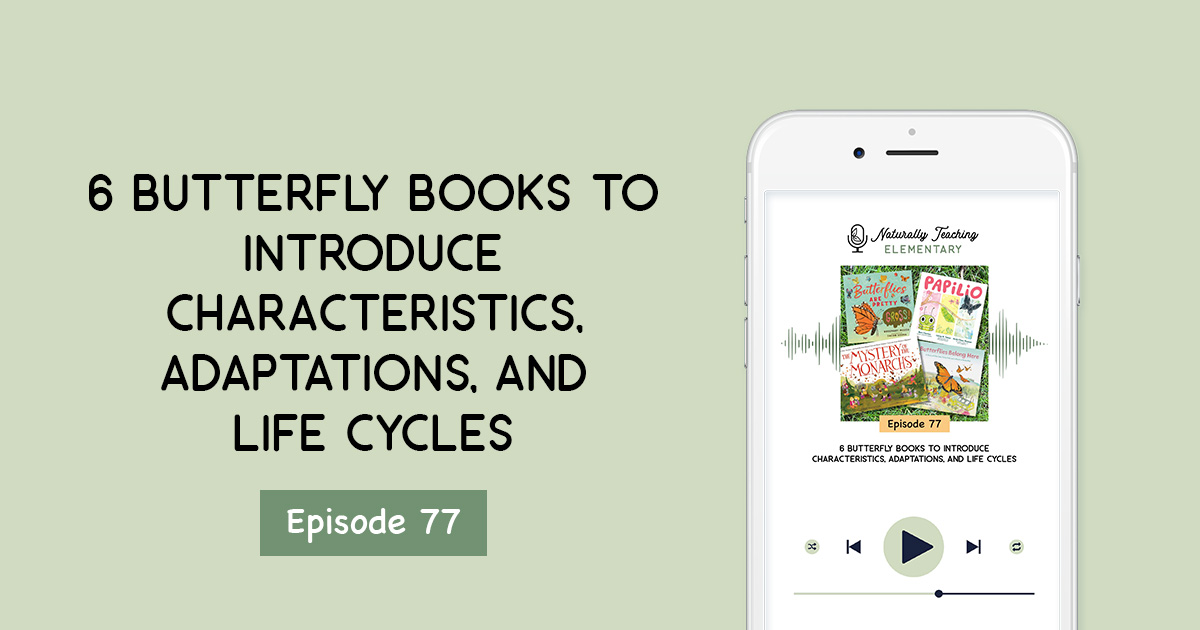
July is a time for butterflies and I’m spending the month sharing ways that you can teach your learners about these beautiful insects through butterfly books and activities. I’ll share these ideas now in the month of the North American Butterfly Count, you bookmark the ideas you love, and come back when you need them during the school year.
In this episode, I share 6 butterfly books. Listen in to discover some amazing picture books about butterflies, their characteristics, adaptations, and life cycles!
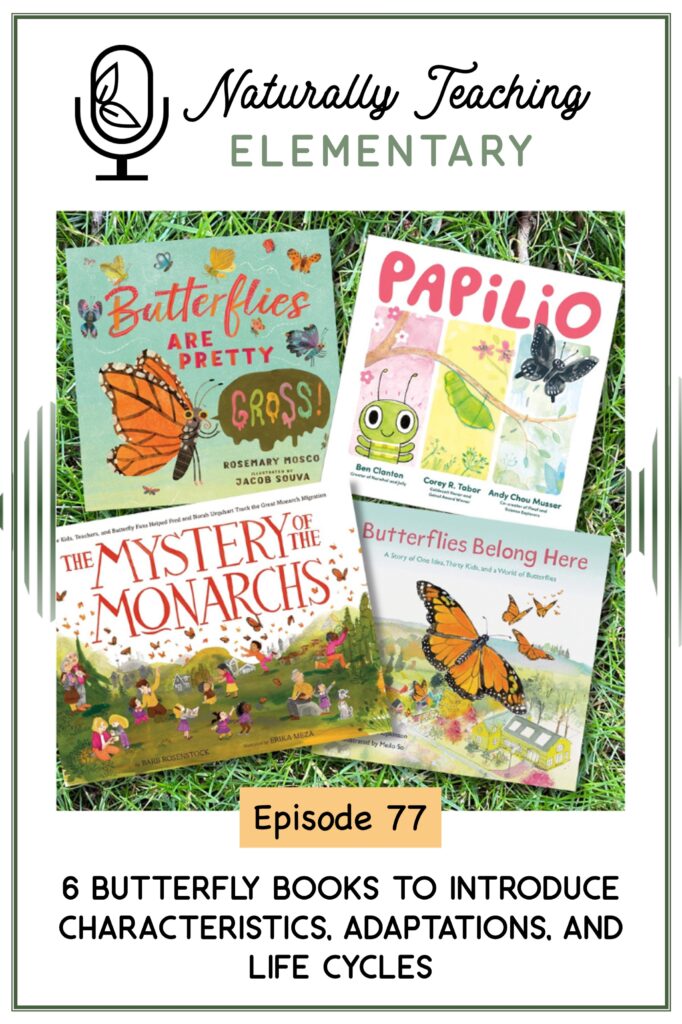
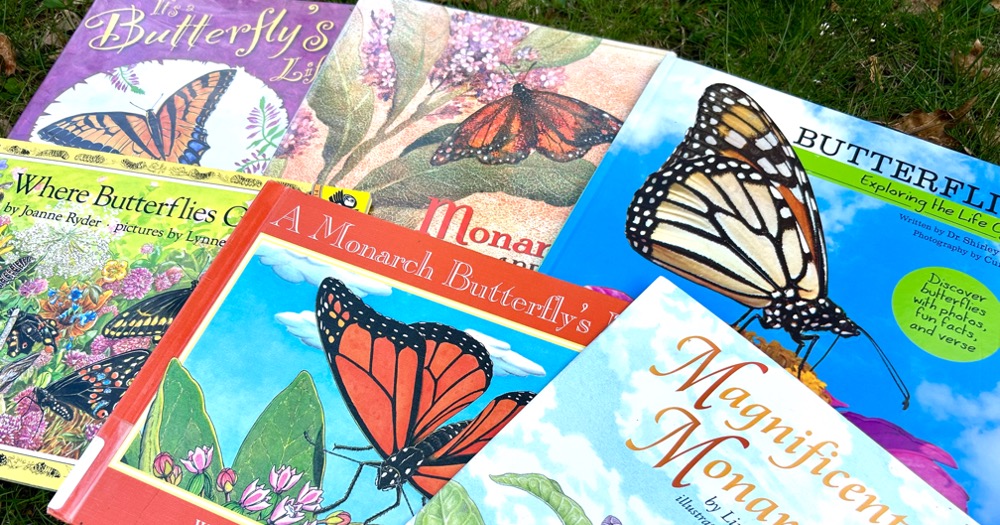
Butterfly books covered in this episode include:
Want to view all of these in one place? Check them out here!
Affiliate Disclosure
I only endorse things that I’ve personally used, come highly recommended by trusted peers, or I’ve done extensive research on. As an Amazon Associate, I may earn commissions from qualifying purchases from Amazon.com. This is at no extra cost to you, the commission is covered by the company.
I am recommending products that I think will be genuinely helpful and useful, and not because of the small commissions that I receive. Please only purchase items if you believe that they will help you achieve your educational goals. If you’d like to learn more, check out my disclaimers page.
[0:00]
Teaching elementary-aged children is a rewarding experience, but as educators and parents, finding the time and resources to create engaging lessons can be a challenge.
That's where this podcast comes in. Welcome to Naturally Teaching Elementary. I'm Victoria Zablocki, a certified elementary teacher turned outdoor educator.
With over a decade of experience coaching teachers on effective teaching methods, I'm passionate about teaching the whole child with authentic and place-based experiences in school and home settings.
Join me as we explore strategies for teaching with practical teaching tips, insightful interviews, picture book reviews, and more. So let's grow together.
Hey everybody, welcome back to the Naturally Teaching Elementary podcast. My name is Victoria Zablocki, and I'm your host.
It's July, and with July comes the North American Butterfly Count, an opportunity for scientists to survey butterfly populations across the continent. So I'm going to spend the month of July talking about butterflies, their life cycle, and amazing adaptations. And what better way to introduce these butterfly concepts than with picture books?
So to help you, the teacher or homeschool parent, get inspired, I've put together a list of six butterfly books that provide you pictures and text to discover butterflies on a deeper level.
And if you've listened to my other episodes about picture books, I'm sure that you've caught on to the fact that I'm very passionate about teaching science concepts with the help of children's literature. And for good reason.
Research has shown that integrating science and literacy has many benefits, including saving teachers time in their schedule, improved attitudes of children towards science, better overall performance in reading and science, and so many more.
For more information about benefits and methods for integrating science and literacy, check out my blog post, “Teaching with Books: How to Integrate Science and Literacy for Elementary Classrooms.” So let's get into these butterfly books.
[1:50]
Book number one is Waiting for Wings by Lois Ehlert.
This book is a beautiful illustration of the life cycle of butterflies. It begins in a garden with a variety of butterfly eggs on plants. Then the eggs hatch and different caterpillars start eating the plant that the eggs were laid on.
Then they form chrysalises and change into butterflies. And once the butterflies emerge, they stretch their wings and fly in search of flowers with nectar. After they've eaten the nectar from flowers in a garden, they fly off to go lay eggs and start the cycle over again.
One thing I really love about this book is that it pictures a variety of butterflies. A lot of books show off the monarch butterfly's life cycle, but this book includes four butterflies so that the reader can see that there are different colored and shaped eggs, different patterned and colored caterpillars, different ways chrysalises are attached to plants, and different sized and patterned butterflies.
The butterflies depicted in this book are a monarch butterfly, a tiger swallowtail butterfly, a painted lady butterfly, and a buckeye butterfly.
Although this is a lovely book, it's good to note that some of the information is simplified to fit into the lyrical style of the narrative. One of these nuggets of info is the line, “…then make a case to grow…” Butterfly caterpillars don't actively make a case like a moth caterpillar spins a cocoon. Their body produces the chrysalis under its exoskeleton and that outer layer splits, revealing a chrysalis.
Two more small notes. The line, “…new butterflies are born…”, makes it sound like a new animal is born, but really it's the same animal we've been watching, but it's gone through metamorphosis. And the other note is when it says they unroll their tongues. It's the lyrical way of referring to a proboscis, a specialized mouth part that lets butterflies and bees reach into flowers to retrieve nectar.
These are just small things, but it's good to keep in mind to help prevent the creation of new naive conceptions in your learners. And I would say that this book would be a great option for your early childhood learners, say preschool through first grade.
[3:50]
Book number two is Are You a Butterfly? by Judy Allen, illustrated by Tudor Humphries. This book is a wonderful introduction to rich vocabulary and concepts about butterflies.
It starts with a male and female butterfly, and they're referred to as the parents. Then it moves on to the eggs on the plants that hatch into caterpillars.
There are interesting specifics about caterpillar adaptations sprinkled throughout the narrative, including having 16 legs, a hairy back with breathing holes, small eyes, and no nose. And Allen shares how caterpillars shed their skin when they get too big.
She then goes on to share how the caterpillar forms a chrysalis, and then changes will be made inside the chrysalis, including growing six legs instead of 16, large eyes instead of small eyes, and growing feelers and wings.
When the butterfly emerges, Allen shares how butterflies have to hang upside down and let their wings unfold and dry before they can fly. The book ends with a variety of interesting butterfly facts.
So this book is chock full of wonderful information. It hits on such a variety of concepts, it really could be used for children of all elementary ages. It could be used to address heredity, metamorphosis, life cycles, adaptations, animal needs, animal characteristics, and more.
It also has a lot of verbs used to describe the butterfly aspects, and could be used to get your learners moving. Sentences like, “[g]rip the leaf with your legs to hold it steady, then eat it, and using the long feelers on your head to smell flowers…”, immediately evoke images of children acting like a butterfly with their bodies.
Whenever you can include movement with a concept, it helps create memories and better recall. This book can give your learners that gift.
This book also depicts a butterfly other than a monarch. It's not a specific species, but if I had to give it a name, the caterpillar looks like a black swallowtail caterpillar, and the butterfly looks like a tiger swallowtail butterfly.
And just a small note, this book also refers to a proboscis as a tongue, but scientists view this as an elongated mouth part, or snout, not a tongue.
[5:51]
Book number three is Papilio by Ben Clanton, Corey R. Tabor, and Andy Chou Musser. This is a silly book about the life cycle of a butterfly written by a collective of three well-known authors and illustrators of picture books.
The story starts with Papilio coming out of her egg onto a leaf. She eats through the leaf and tumbles to the ground. Then she goes in search of other food and gets some help from a mouse to reach a strawberry.
She then turns into a chrysalis on the stem of a plant, and while she's in her chrysalis, a robin takes her off the plant and fights over her with another robin until she accidentally pops out of their mouths and flies through the air. The same mouse that helped her get the strawberry catches her and fixes her back to the plant so she can finish changing.
Then she emerges from her chrysalis and tries to figure out how to fly to be able to reach a flower. In the end, she shares a berry with her mouse friend.
This book is a whimsical look at a black swallowtail butterfly's life cycle. This is a mixed bag when it comes to facts. There are some good things and some not-so-factual things in this story, so if you're looking for more of a fact-steady book, you should probably skip this one.
Factually, the life cycle stages are mentioned with the appropriate words in the right order, including egg, caterpillar, chrysalis, and butterfly. They also highlight how caterpillars focus on eating after they hatch.
And one thing that I love that I haven't found in other books is the mention of goo inside the chrysalis. Most books just glaze over the amazing transformation that happens during the pupa stage, but inside the chrysalis, enzymes are released which dissolve most of the old body tissue, and then dormant cells use the liquid to fuel the process of growing the butterfly body that emerges once the metamorphosis is complete.
With how whimsical this book is, there are some liberties the authors and illustrators took with the natural history of butterflies, including a caterpillar weaving a chrysalis around its body, which we talked about with a previous book, a mouse befriending a caterpillar, a robin tossing a chrysalis around without compromising it, and a butterfly eating a berry. Regardless of these facts versus fiction points, this book is so much fun and has the charm and puns that Clanton, Tabor, and Musser are known for.
[8:01]
Book number four is Butterflies Are Pretty...Gross by Rosemary Cosco, illustrated by Jacob Souva. This book is a silly take on butterflies, introducing the thought that butterflies are pretty, but in actuality they're pretty gross.
Some of the less pleasant facts that are introduced in this book are that some butterflies eat rotten food and dead animals; other butterflies don't have bright colors and are just brown, white, or gray; some butterflies are really noisy; all butterflies are shapeshifters; some caterpillars are carnivorous and eat bugs; other caterpillars are stinky and look like bird poop; some butterflies have butts that look like faces; and other butterflies eat poop while some drink tears.
This book is a fun way to discover a variety of butterfly adaptations, their life cycle, and their needs. I appreciate the humor, and I can hear your first through third graders laughing at all the different gross facts.
As an additional bonus, there are more facts at the back of the book about the different butterflies presented in the story.
[9:02]
Book number five is The Mystery of the Monarchs: How Kids, Teachers, and Butterfly Fans Helped Fred and Norah Urquhart Track the Great Monarch Migration by Barb Rosenstock, illustrated by Erika Meza.
This book is kind of about butterflies, but also about scientists that work with butterflies featuring Fred and Norah Urquhart.
This book starts with the childhood of Fred Urquhart and his interest in monarch butterflies. Fred read an article by a professor about how monarchs migrate, and when he wrote to the professor to find out where the monarchs went, the professor replied that no one knew.
When he went to college, Fred studied entomology and worked at a museum. He began catching monarchs and marking their wings with numbers, dots, or spray of paint. He also tried a tag with red ink that washed away, a paper tag that he licked but it fell off, and then a gummed tag that stuck to itself through a small hole in the wing that didn't hurt the butterfly.
He tagged for ten years, but didn't get much data. When he worked at a university, Fred and his wife developed a new tag that folded over the wing of a monarch that was lighter, waterproof, numbered, and told the finder to send it to Zoology University, Toronto, Canada.
Fred asked other entomologists to help the project by tagging butterflies, but no one replied. So his wife Nora wrote about their project in a magazine and asked the public to help tag monarchs. They got responses and sent instructions and tags to the people willing to help.
Then Nora put articles in newspapers and sent out more instructions and tags and people started returning monarchs they found. Fred and Nora tracked the butterfly's movement on a large map of North America by pinning where the butterfly was tagged and where it was found, marking the journey with a string.
Fred and Nora started the Insect Migration Association and called their members Research Associates, which were comprised of librarians, truckers, doctors, and more, but the most active group of citizens were actually teachers and students.
Fred and Nora followed their map's findings that monarchs were headed to Texas, and they traveled into Mexico asking for help to tag and send back tagged monarchs. Catalina Aguado and Ken Brugger joined the butterfly family and hiked the mountains west of Mexico City, and on January 2, 1975, Catalina and Ken found the monarchs in a forest and let the Urquharts know. It took Fred 50 years to answer the question, where do monarchs go?
This book is so inspirational. Not only does it slide in some butterfly natural history while moving through the narration of Fred's journey, including the monarch butterfly's life cycle, how they need milkweed plants to survive, and how they disappear in the fall, but it also shares the idea that people can reach out to a scientist to ask questions and learn more, that they're not just celebrities that we can't come into contact with.
It also illustrates that scientists often have to try things over and over again to get the results they were hoping for. Fred went through many iterations of that tag to be able to get one that worked. He also tagged for 10 years with no data coming in, and he also spent 50 years on this project before he actually got an answer.
And it also shows how powerful citizen science can be, which could hopefully inspire your learners to want to join a science movement.
All in all, this book is a wonderful way to explore butterflies, the evolution of science, and a biography on a scientist that made a difference. Due to its length, vocabulary, and content, I would suggest this book for your upper elementary and middle school grades.
[12:28]
Book number six is Butterflies Belong Here: A Story of One Idea, Thirty Kids, and a World of Butterflies by Deborah Hopkinson.
This book is about a little girl that moved from another country to the United States where she couldn't speak or read English. She introduces a lot of information about the monarch butterfly and their migration from Mexico to the northern United States, comparing the journey of the monarch to her immigration to the U.S.
This lengthy book moves through the seasons and explains the special relationship between monarch butterflies and the milkweed plants. The main character is empowered by the school librarian to get her class involved in creating a monarch way station, an environmental act accomplished by a set of students.
And this book is another great illustration of butterfly natural history interwoven into a human story. So many facts are shared about the life cycle of monarchs, their seasonal migration, how caterpillars molt or shed their skin, how they form a pupa, and how those special dormant cells called imaginal cells form the body inside the pupa.
The main character also shares the negative impact humans had on the monarch butterfly population by eliminating their host plant milkweed, but then the main character shares her findings with her class and they all agree to make a monarch way station at their school to take action and to help the monarchs, integrating the power of citizen science again.
Due to its length and vocabulary and content, I would say this book is also better suited for upper elementary and middle school grades.
[13:52]
So in a nutshell, today we talked about six butterfly books for elementary age students. Titles that were summarized include Waiting for Wings by Lois Ehlert, Are You a Butterfly? by Judy Allen, illustrated by Tudor Humphries, Papilio by Ben Clanton, Corey R. Tabor, and Andy Chou Musser, Butterflies Are Pretty…Gross! by Rosemary Cosco, illustrated by Jacob Souva, The Mystery of the Monarchs: How Kids, Teachers, and Butterfly Fans Helped Fred and Norah Urquhart Track the Great Monarch Migration by Barb Rosenstock, illustrated by Erika Meza, and Butterflies Belong Here: A Story of One Idea, Thirty Kids, and a World of Butterflies by Debra Hopkinson, illustrated by Meilo Sol.
And if you're looking for more butterfly books, check out my article “How Butterflies Grow: 8 Picture Books About Butterfly Life Cycles”, as well as my podcast episode, episode 9, Exploring Invertebrates: 10 Picture Books to Introduce Animal Characteristics on naturallyteaching.com, or follow the link in the show notes.
So thanks for taking time to listen today. I know you're busy and I truly appreciate the time you take to tune in. If you have any questions, wonderings, or butterfly books that you use, get ahold of me on Instagram at naturally.teaching, or you can email me at victoria@naturallyteaching.com.
And don't forget to check out the show notes for this episode at naturallyteaching.com/episode77 for all the links for the books, the articles, and the podcast episodes.
So thanks again for joining me today. And until next time, keep exploring, keep learning, and keep naturally teaching.
Thank you so much for tuning into today's episode of the Naturally Teaching Elementary Podcast. I hope you found it informative, inspiring, and full of actionable insights to enhance your teaching journey.
Connect with me on social media for more updates, science tidbits, and additional resources. You can find me on Instagram and Facebook at naturally.teaching.
Let's continue the conversation and share our passion for teaching elementary age children together.
Don't forget to visit my website at naturallyteaching.com for all the show notes from today's episode. If you enjoyed today's episode, please consider leaving a review on your favorite podcast platform.
Your feedback helps me improve and reach more educators like you. Thank you again for listening. And until next time, keep exploring, keep learning, and keep naturally teaching.

0