Science
Frogs and Toads Together: Why do Amphibians Group Up?April 11, 2025

An elementary teacher science blog
This is a topic I’ve been excited to dive into for some time, and summer seemed like the perfect opportunity to introduce it. If you’ve never thought about how teaching with actual photographs can help your learners in science, this episode is a must-listen. I’m an avid collector of nature photos because you just never know when you’ll need that random pic of a raccoon track in the mud.
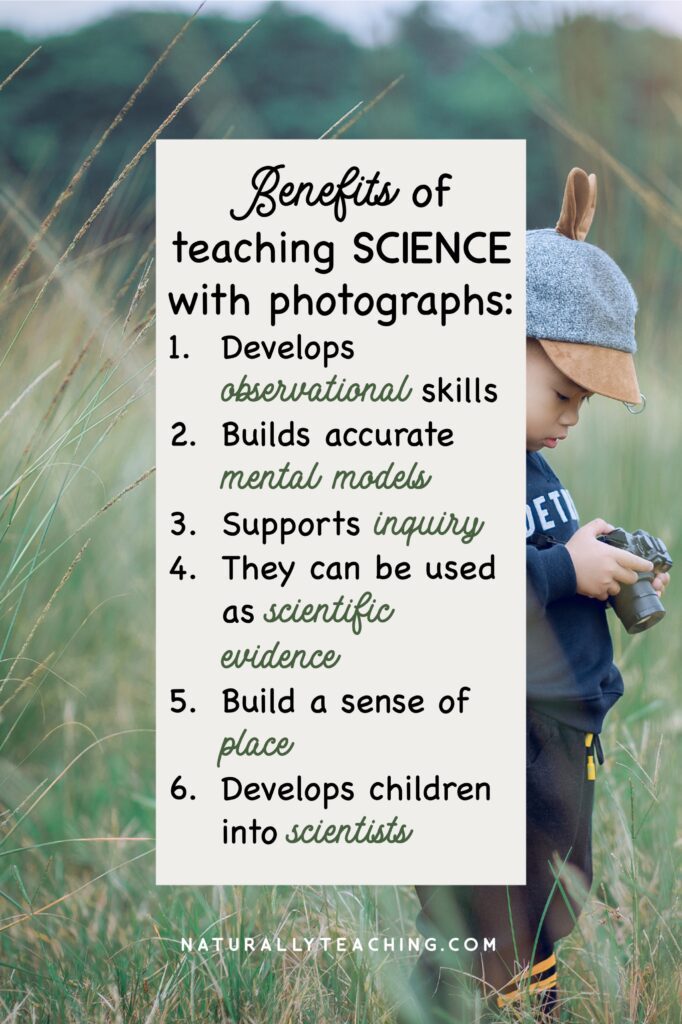
In this episode, we’ll talk about 6 research-based benefits to teaching with photos including:
[0:00]
Teaching elementary-aged children is a rewarding experience, but as educators and parents, finding the time and resources to create engaging lessons can be a challenge.
That's where this podcast comes in. Welcome to Naturally Teaching Elementary. I'm Victoria Zablocki, a certified elementary teacher turned outdoor educator.
With over a decade of experience coaching teachers on effective teaching methods, I'm passionate about teaching the whole child with authentic and place-based experiences in school and home settings.
Join me as we explore strategies for teaching with practical teaching tips, insightful interviews, picture book reviews, and more. So let's grow together.
Hey everybody, welcome back to the Naturally Teaching Elementary podcast. My name is Victoria Zablocki and I'm your host.
So it's the fifth Monday of the month, which means I'm rolling off theme for a week. If you've been following along, you know this month my focus was on the summer season and providing your family some school-to-home connections to help prevent summer slide.
I'm going to pivot away from that and instead talk about a way that you can help set yourself and your learners up for success in the fall by acting today, and really the rest of the summer.
But it's not what you think. I'm not out here saying you should go out and get involved in a bunch of professional development opportunities because I want you to get a break this summer. You 100% deserve it.
What I'm talking about is thinking about teaching with photographs, especially in your science studies.
If you haven't thought about how teaching with photographs can benefit your learners, I've got six research-based benefits coming your way today.
[1:30]
So first, I want to chat about why teaching with photographs even matters. Photographs provide authentic visual evidence that students can analyze and use to support scientific claims.
When they're looking at an authentic photograph, there aren't human mistakes or misidentification skewing their view of the subject like there could be in illustrations. These are real, raw, and up for observation and interpretation.
We'll come back to AI because I'm sure you're visualizing one of those many UFO, or UAP as they call them now, pictures and thinking, “Victoria, photographs can be faked really well right now.”
Even though not all photographs can be trusted, we'll talk later about how to provide your learners trusted sources. So why does this even matter?
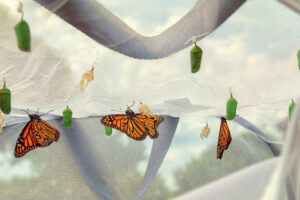
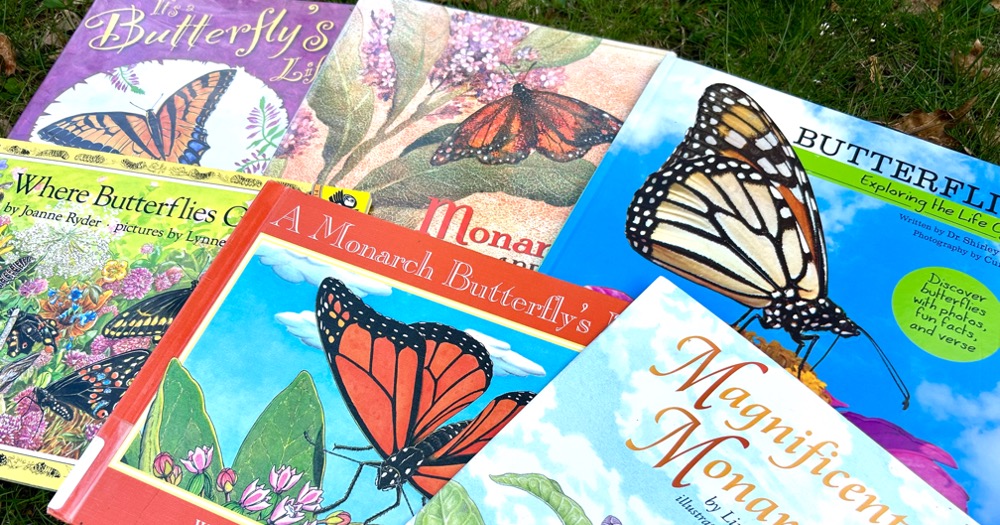
Scientists start with observation, and sometimes you can't get up close and personal with your preferred subjects because, let's be honest, kiddos are often too loud for a monarch butterfly to sit still and let them determine if they're male or female.
But if they could look at a picture, they'd notice that males have small black dots on their lower wings, which are specialized scent glands, and females do not.
And after lots of practice and introduction to multiple specimens or photographs, your learners can become really adept at looking for those little black dots, and then they'd be able to identify males versus females in the field.
[2:45]
In the same vein, teaching with photographs helps build accurate mental models. Using the example of the monarch butterfly again, many of us tend to visualize them in our heads exactly the same way every time - in perfect condition on a milkweed plant on a sunny day, because that's what we've seen time and time again.
But nature has variation, and exposure to multiple photographs of the same specimens of organism can help your learners build complex mental models that represent the variation that occurs naturally.
Consider sharing with them a picture of a monarch in pristine condition, another with some of its wing torn, one on a milkweed plant, another on a goldenrod plant, one out on a sunny day, another one hiding under leaves in the rain, one by itself, and a bunch in a tree during migration.
All of this variation will provide your learners an understanding that monarch butterflies are complex, and not just a duplicate of that one picture they keep seeing over and over again in a textbook.
And again, multiple exposures will give your learners that opportunity to practice their observational skills and will help them better identify the subject in the field when they come upon them.
[3:51]
Not only can teaching with photographs develop observational skills, it can also support inquiry. Questioning is the backbone to science, and looking at pictures can get a person's gears turning.
And I'm not just referring to overly interesting or unique pictures, like a platypus with an egg, I'm talking any pictures of the natural world. Children are inherently curious, and providing them with a variety of images can help to foster that curiosity and start the questioning skill.
Not all children question naturally, but by providing them photographs as prompts to foster their curiosity, you can have discussions and practice the skill of questioning.
You and other children that naturally question can be their inner voice for those children still learning the skill, and the photographs can help drive those conversations, leading to a more rich and inquiry-driven environment in your classroom or home.
[4:42]
One of the most exciting benefits for teaching with photographs is how your learners can use photographs as scientific evidence to back up their claims.
If you've been following this podcast, you've heard me bring up phenology studies a time or two. If you haven't, a phenology study is one where you select a location in nature that you monitor over time.
As an example, you could have your learners select a particular tree and visit it once a month for the school year to make observations of how it changes, stays the same, and the life that it supports.
Now, if you add photograph taking as a form of documentation, your learners are able to compare real, authentic data that is caught in time at their phenology location.
They can line up their photographs and compare and contrast their special spot. This mirrors what real scientists do in the field and can help them make claims and support those claims with visual evidence they caught on camera.
As another example, your learners could also look at three different birds and compare and contrast their adaptations. What do they think each bird eats? Why do they think that? What about their bills make them look like they're an insect eater? Where do you think they live? What about their coloration makes you think that?
By teaching with photographs, you're giving your learners the opportunity to make observations, identify patterns, ask questions, and support claims with evidence they can actually see.
And what about those celestial bodies that we can't get up close and personal with? Photographs taken by NASA can provide your learners an opportunity to investigate and make claims on scientific wonders a world away, something they otherwise wouldn't have access to.
[6:12]
On the flip side, teaching with photographs can build a sense of place when you use pictures taken of organisms, ecosystems, weather, and other natural aspects of your own community.
I've said it before and I'll say it again - if you want to develop stewards, start close to home. Children are going to care more about something that directly affects them.
So immerse them in photographs of your local nature. When you're talking about animals, use pictures of local species. When you're talking about ecosystems, use pictures from ecosystems they could go and visit over the weekend with their family.
When you're talking about the seasons, show pictures of seasonal signs your learners experience, or better yet, pictures of your playground or backyard during the different seasons.
Place-based education research suggests that learning rooted in local environments helps students develop stronger connections to their communities and local ecosystems.
This small change in your picture selection will help your learners be more engaged, feel more connected to the phenomena, and also feel closer to their community.
[7:10]
And lastly, teaching with photographs can give your learners the opportunity to be scientists. Using an iPad, a digital camera, or even an instant print camera, give your learners the opportunity to take pictures to enhance their scientific learning.
Do that phenology study and print out your learners' pictures to put in their scientific notebook. This documentation will help them identify patterns in a way no other method would.
Take pictures of creatures you dip out of vernal pools and put them in your notebooks. I did this with my preschoolers this last year, and their journal entries were the most detailed and developed they'd been all year long. The possibilities are truly endless.
Plus, if you can have your learners capture digital pictures at school or home with family, you could add them to your own photo library that you make available to your learners throughout the school year.
[7:56]
So going back to that point about AI and how photos can be faked very well in this day and age, I'm going to suggest that you and your students start a photo library to help you avoid having to dig through the digital world to find authentic photos. If you or your families took the photos in nature, you know they're authentic.
So this summer, I encourage you to enjoy nature and also document it. Start building a collection of photographs that reflects the natural world your students experience every day.
By the time school starts, you'll have the beginnings of a science resource library that's uniquely connected to your community and ready to support meaningful science learning all year long.
[8:32]
But since many of us don't have the time and space to take hundreds of photos before school starts, trust me, I know, here are some ideas of places that you can get photos for free (but I can't guarantee they won't have a UAP in them the same way if you had taken the photos yourself ).
Canva for Teachers has lots of variety of pictures of lots of different animals and weather and all sorts of different natural phenomena.
Wikimedia Commons, Unsplash, Pixabay are all locations with free pictures, but I haven't been on them very much. I'm more familiar with Canva for Teachers. These are free. I'm not sure what they provide for you, but it's a possibility depending on what you need.
You could also reach out to nature centers and local conservation organizations to see if they have pictures of local species they'd be willing to share with you for educational purposes. But you have to be careful because you can't just go onto their website and take their photos. They are copyrighted and they're protected for the different organizations.
[9:30]
So in a nutshell, today we talked about six research-based benefits to teaching with photographs. We talked about why teaching with photographs even matters, how teaching with photographs helps build accurate mental models, how teaching with photographs supports inquiry, how photos can be used for scientific evidence, how teaching with photographs can build a sense of place and community, and how student-created photographs develop scientific skills in children.
And don't forget to start developing your own photo library to use for teaching and as a database for your learners to draw from. This summer is a fantastic opportunity to grab some pictures of plants, mushrooms, weather, water, ecosystems, and more.
So thanks for taking time to listen today. I know you're busy and I truly appreciate the time you take to tune in.
If you have any questions, wonderings, or ways that teaching with photographs benefits your learners that I missed, get ahold of me on Instagram at naturally.teaching or you can email me at victoria@naturallyteaching.com.
And don't forget to check out the show notes for this episode at naturallyteaching.com/episode76 for the links to those free photo libraries. So thanks again for joining me today, and until next time, keep exploring, keep learning, and keep naturally teaching.
Thank you so much for tuning in to today's episode of the Naturally Teaching Elementary Podcast. I hope you found it informative, inspiring, and full of actionable insights to enhance your teaching journey.
Connect with me on social media for more updates, science tidbits, and additional resources. You can find me on Instagram and Facebook at naturally.teaching.
Let's continue the conversation and share our passion for teaching elementary age children together. Don't forget to visit my website at naturallyteaching.com for all the show notes from today's episode.
If you enjoyed today's episode, please consider leaving a review on your favorite podcast platform. Your feedback helps me improve and reach more educators like you. Thank you again for listening, and until next time, keep exploring, keep learning, and keep naturally teaching.

0